Šneková převodovka ATEX a IECEx: Specifikace certifikace pro prostředí s nebezpečím výbuchu
Zone classification, equipment category coding (II 2G T4), T-class surface temperature limits, ignition source elimination, certification documentation chain and IECEx/MSHA equivalence.
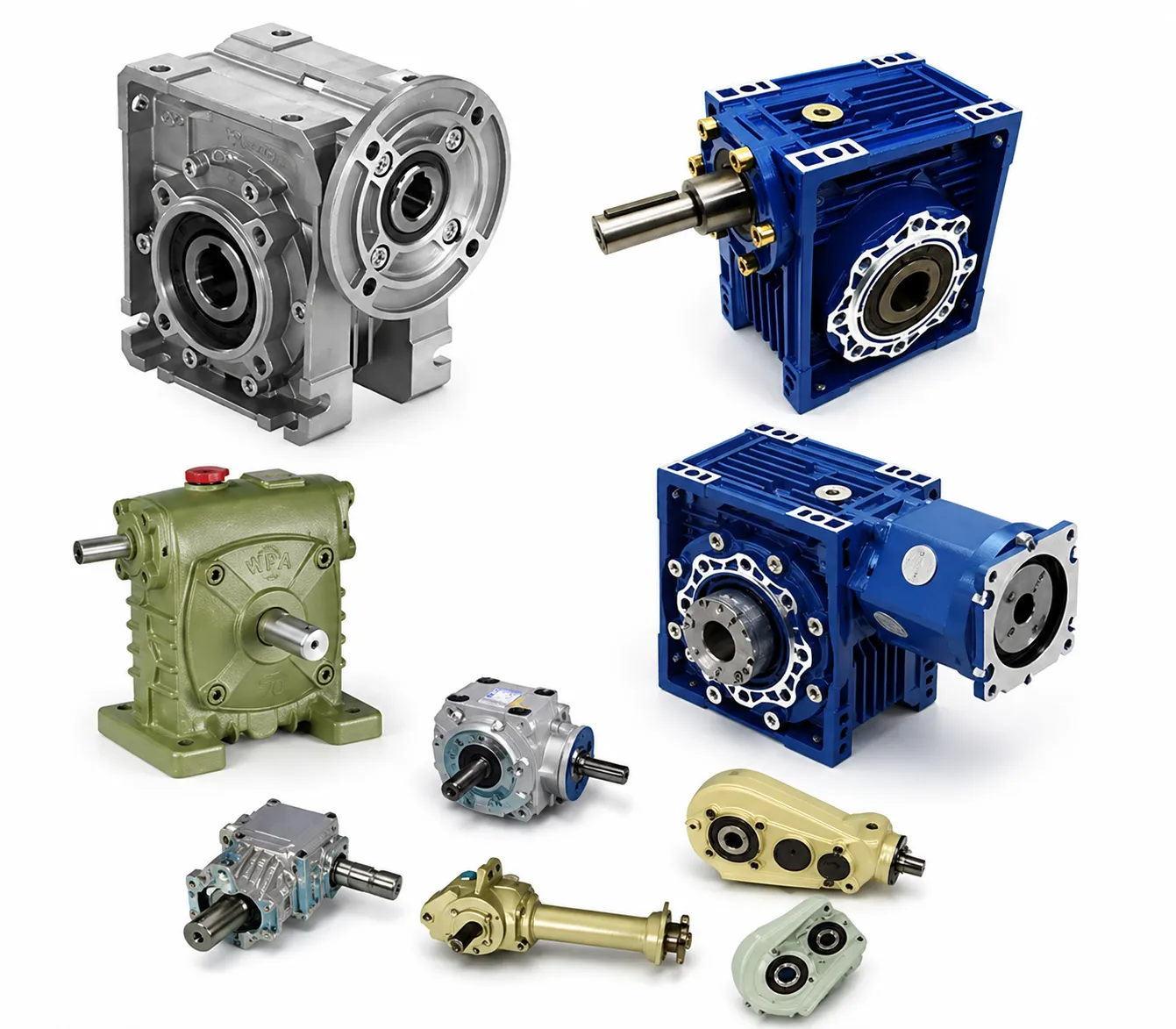
Hazardous-area worm gearbox specification sits at the intersection of mechanical engineering and explosion-prevention regulation. EU plants apply ATEX directive 2014/34/EU; IEC member states apply the IECEx scheme aligned with IEC 60079; US mining applies MSHA permissibility under 30 CFR Part 18 and Part 36. The three frameworks share the same physics — ignition-source elimination through controlled surface temperature, contained mechanical contact, and verified manufacturing quality — but differ in documentation, marking, and notified-body involvement. The article below decodes zone classification, the equipment category code (II 2G T4 etc.), T-class surface temperature limits applicable to a worm gearbox, the four ignition-source mechanisms specific to worm-architecture drives, and the certification documentation chain required for plant approval.
ATEX vs IECEx vs MSHA — Three Regulatory Frameworks
Three major regulatory frameworks govern hazardous-area worm gearbox supply across global markets. Each enforces the same underlying physics but through different administrative routes.
| Framework | Jurisdiction | Key Standard | Marking |
|---|---|---|---|
| ATEX | EU + EEA | Directive 2014/34/EU | CE Ex symbol + category code |
| IECEx | IEC member states (mutual recognition) | IEC 60079 series | IECEx certificate number |
| MSHA | US underground mining | 30 CFR Part 18 / Part 36 | MSHA approval number |
For Korean-manufactured worm gearbox supplied into EU markets, ATEX is the operative scheme. For supply into Australia, India, Brazil, Korea, Japan and most of Southeast Asia, IECEx is typical. For US underground coal mines, MSHA applies in addition. Multi-market supply often carries dual ATEX + IECEx certification — IECEx test data accelerates ATEX type examination via mutual technical recognition, but separate ATEX notified-body involvement remains mandatory. Surface industries in the US apply NEC/CEC area classification rather than MSHA; the equivalent worm gearbox certification path here is UL/CSA Class I Division 1 or 2.
Zone Classification — Gas Atmospheres and Dust Atmospheres
Hazardous areas divide into zones by likelihood of explosive atmosphere presence. Gas zones (G) and dust zones (D) are independently classified; an area can be both Zone 1 gas and Zone 22 dust, in which case the worm gearbox specification must satisfy both atmospheres simultaneously.
Drive installations rarely sit in Zone 0 (interior of fuel tanks, distillation column trays) — these zones use intrinsically safe instrumentation rather than mechanical drives. Zone 1 and Zone 2 cover most demand: Zone 1 includes flammable solvent storage rooms, paint booth interiors, sewage pump pits with methane potential. Zone 2 includes battery rooms, fuel transfer pump skids, and well-ventilated solvent loading areas. For dust atmospheres, Zone 21 includes silo discharge areas and mill enclosures; Zone 22 includes packaging halls handling fine powders.
Equipment Category Code — Decoding II 2G T4
An ATEX-marked unit carries a category code that maps the unit to its acceptable installation zone. The code structure breaks into four positions:
II 2G T4
II
Equipment group: I = mining (underground), II = surface industries.
2
Category: 1 = Zone 0/20, 2 = Zone 1/21, 3 = Zone 2/22.
G
Atmosphere: G = gas, D = dust. Both shown as separate codes when applicable.
T4
T-class: T1-T6 maximum surface temperature rating (see next section).
A worm gearbox marked II 2G T4 is therefore: surface industry equipment, suitable for Zone 1 gas atmospheres, with maximum surface temperature 135 °C. The same unit cannot be installed in Zone 0 (requires II 1G), and is conservative if installed in Zone 2 (where II 3G would suffice). Buying a category higher than the installation zone requires is wasteful capital; buying lower than required causes plant approval failure.
T-Class Surface Temperature Limits — Six Steps
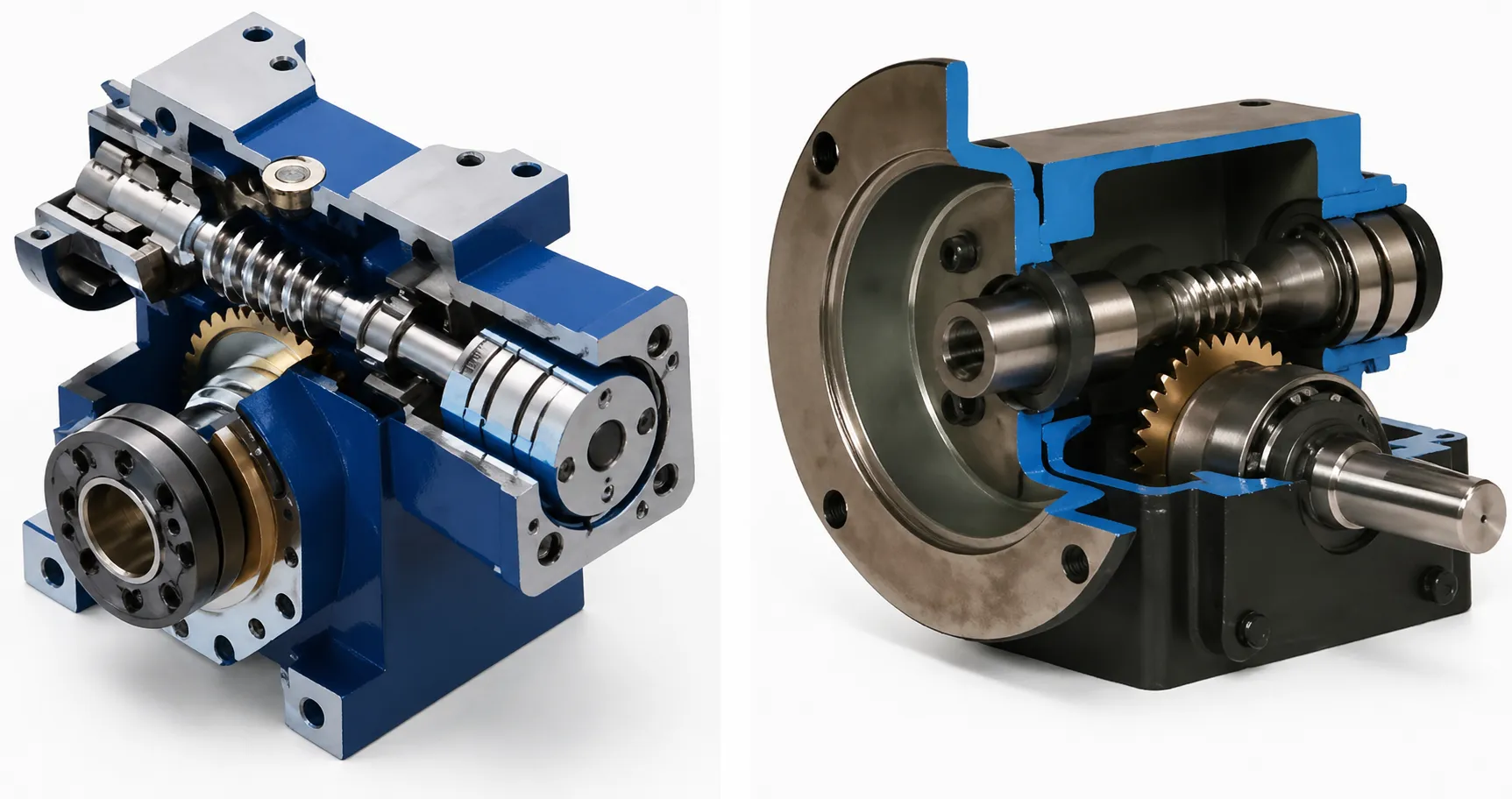
T-class limits map maximum equipment surface temperature against gas auto-ignition thresholds. Most flammable gases auto-ignite somewhere between 200 °C and 450 °C; specifying the gearbox T-class to stay below this auto-ignition value is the core ignition-source elimination requirement.
For most surface industrial worm gearbox installations, T4 (135 °C) is the practical specification. Standard worm gearbox oil-bath operation runs 65-85 °C steady-state under nominal load — comfortably below T4. Under heavy continuous duty or high ambient (40+ °C), oil-bath temperature can climb toward 105-115 °C, which encroaches on the T4 limit and may require sizing up one frame or specifying forced cooling to maintain margin.
Four Mechanical Ignition Sources Specific to Worm-Architecture
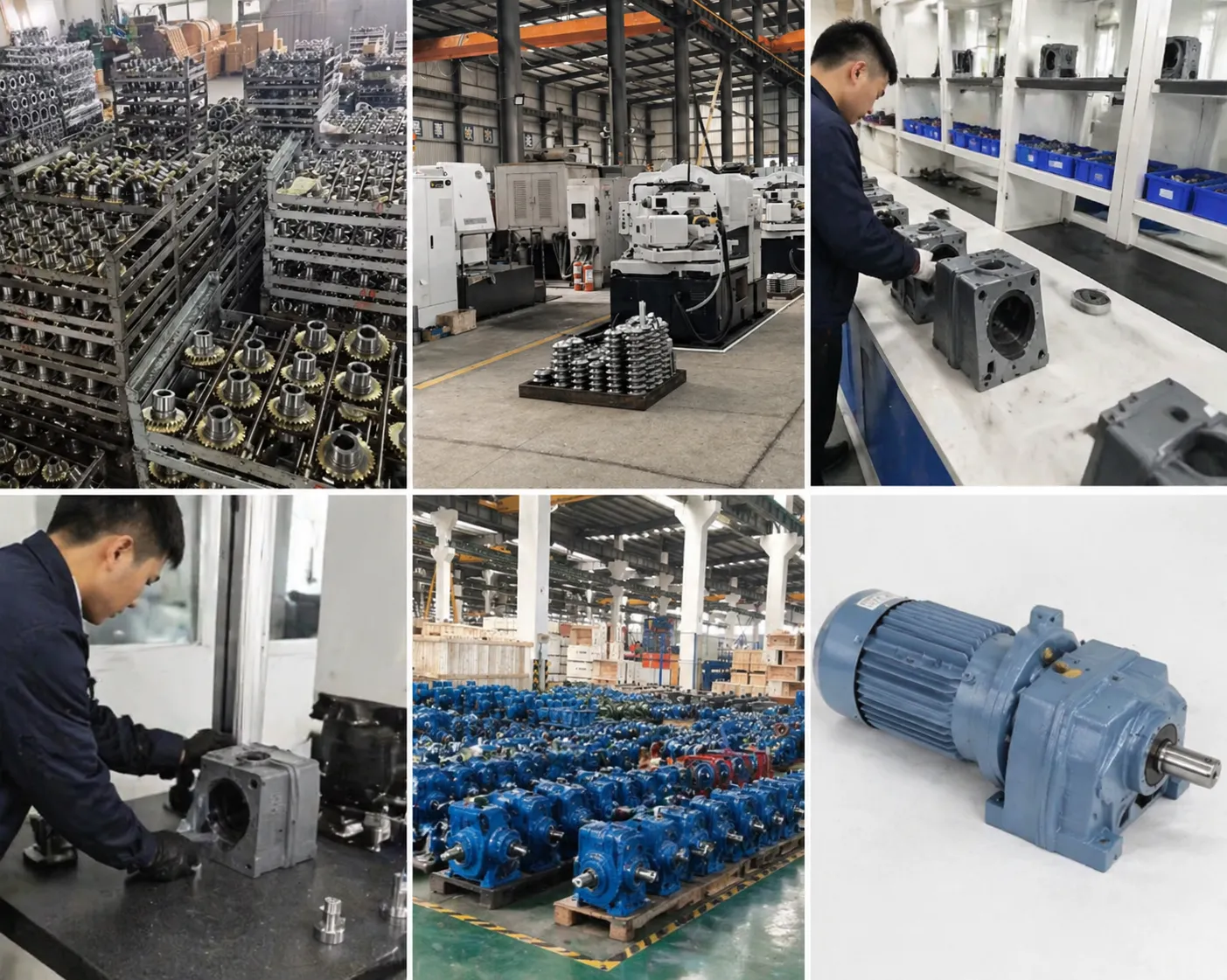
An ATEX-rated worm gearbox eliminates four ignition-source mechanisms that generic industrial designs leave open. Each is addressed by specific material, design or sealing choices.
⚠ IGNITION 01
Hot mesh and bearing surfaces
Worm-wheel mesh sliding-contact friction generates 60-85% of total gearbox heat. Limit by oversizing frame, synthetic PAG lubricant with high VI, and active thermal monitoring.
⚠ IGNITION 02
Mechanical sparks from contact
Steel-on-steel impact (cover bolt-down, output shaft against guard) can produce sparks. Eliminate by non-sparking materials (bronze, beryllium copper) on impact-prone contact points.
⚠ IGNITION 03
Static electricity discharge
Painted housings can accumulate static charge. ATEX-rated housings use conductive coatings (volume resistivity < 1 GΩ) and explicit equipotential bonding to plant ground.
⚠ IGNITION 04
Self-heating from oil decomposition
Mineral oil oxidation past 90 °C generates exothermic decomposition pathways. Synthetic PAG resists oxidation 4-6× longer; ATEX worm gearbox specifications mandate synthetic fill at T4 and below.
Certification Documentation Chain
A delivered ATEX-rated worm gearbox carries five documents that constitute the audit-ready compliance package. Plant approval engineers and notified body inspectors review these before commissioning sign-off:
- ▸EU declaration of conformity — manufacturer’s signed statement that the worm gearbox satisfies the relevant ATEX directive harmonised standards.
- ▸Type examination certificate — issued by a notified body (NB) confirming design conformity. Required for II 1G, II 2G/2D and most II 3GD configurations; II 3G optional.
- ▸Quality assurance notification — for II 1G, II 2G/2D production; NB audits manufacturer QA system annually.
- ▸Instruction manual — installation, operation, maintenance procedures specific to ATEX requirements. Must be in the local language of the installation country.
- ▸Marking on the data plate — full ATEX category code (e.g., II 2G T4 IIB), CE Ex symbol, NB number, manufacturer details, serial number traceable to test records.
Browse our katalog šnekových reduktorů for ATEX-certifiable variants. Lead time for a fresh II 2G T4 certified unit is 10-14 weeks vs 2-4 weeks for standard industrial; the certification audit and witness testing dominate the schedule.
ATEX Worm Gearbox FAQ
Q: How much does ATEX certification add to worm gearbox capital cost?
A: Capital premium varies by category. II 3G T4 (Zone 2 only) typically adds 20-35% over standard industrial — minimal hardware change, mostly documentation. II 2GD T4 (Zone 1 gas + Zone 21 dust) adds 50-80% — non-sparking material substitutions, conductive coating, T-class verification testing. II 1G T4 (Zone 0) adds 120-200% and is rarely specified for worm gearbox applications since Zone 0 areas typically use intrinsically safe instrumentation rather than mechanical drives.
Q: Can I retrofit an existing standard worm gearbox to ATEX status?
A: No. ATEX certification applies to a specific design verified through type examination — a unit not built and audited under that scheme cannot be retroactively certified. Replacement is the only compliant path. Some plants attempt “engineering judgement” assessments to leave existing standard units in place, but this typically fails ATEX inspector review and creates liability exposure for the plant operator. The cost of replacement is far lower than the cost of an explosion event in a facility found non-compliant.
Q: Is IECEx the same as ATEX once certified?
A: Technically equivalent but legally separate. IECEx and ATEX share the same underlying IEC 60079 standards, so a unit that meets IECEx test requirements typically also meets the technical bar for ATEX. However, ATEX has additional formal requirements: EU notified body involvement, EU-language documentation, CE marking. A Korean-manufactured worm gearbox with IECEx certification can usually obtain ATEX certification with reduced re-testing (mutual recognition of test data) but still requires the formal ATEX administrative process. For multi-market supply, dual ATEX + IECEx certification is the practical baseline.
Q: Does a worm gearbox in a Zone 22 dust area need certification?
A: Yes — Zone 22 still requires ATEX category 3D equipment. Zone 22 means dust cloud presence is unlikely, but possible during abnormal operation (process upset, ventilation failure). The required equipment category is II 3D T-class equivalent to dust ignition temperature minus 75 °C safety margin. Plants sometimes assume Zone 22 is “non-classified” but this is incorrect; the directive applies to all classified zones including Zone 22. Confirm zone classification with the plant ATEX dossier before specifying.
Q: How is the worm gearbox T-class verified during type examination?
A: The notified body subjects the unit to maximum-load operation in a test cell, monitors surface temperature with thermocouples at multiple points (housing, bearing locations, output shaft, oil sump) until thermal equilibrium is reached, and records peak surface temperature. The published T-class is then conservative — typically the peak measured value plus a safety margin (5-15 °C). The certificate documents the test conditions: ambient, load profile, duty cycle. Operating outside the certified envelope (higher ambient, longer duty, higher load) invalidates the T-class for that installation.
Q: How do I get an ATEX-certified quote?
A: Send our engineering team the application: zone classification (gas Zone 0/1/2 plus dust Zone 20/21/22), ambient temperature range, gas group (IIA/IIB/IIC) or dust group (IIIA/IIIB/IIIC), required T-class, output power, speed and ratio. We return a sized recommendation with the full ATEX category code, certification path (notified body, lead time), documentation deliverables and capital cost within 48-72 hours. For multi-market supply requiring both ATEX and IECEx, mention destination markets so we can align certification scope.
Specifying an Ex-Rated Worm Gearbox?
Send us zone classification, gas/dust group, ambient envelope, required T-class and drive parameters. Our Korean engineering team returns the full ATEX category code, certification path with notified body involvement and lead time within 48-72 hours.
Editor: Korea Ever-Power Engineering Team