Product Description
Model:; XWSG5 electric operated part turn worm gearbox
| Model | Electric Output Torque N·m | Ratio | Electric Input Torque N·m | Input Flange ISO5210-2001 | Standard Base Output Flange | Thickened Base Output Flange | Max.; Stem Diameter mm | Input Shaft Diameter mm | APPROX.; Weight kg | ||||||||||||||
| XWSG4 | 1700 | 479 | 413 | 348 | 279 | 213 | 131 | 13 | 15 | 18 | 23 | 30 | 48 | F10/F12/F14 | N/A | F12/F14/F16 | 52 | 25 | 36 | ||||
| XWSG5 | 3000 | 472 | 407 | 343 | 275 | 210 | 129 | 24 | 27 | 32 | 40 | 53 | 86 | F10/F12/F14 | N/A | F14/F16/F25 | 76 | 25 | 62 | ||||
| XWSG6 | 7000 | 486 | 419 | 353 | 284 | 216 | 132 | 53 | 62 | 73 | 91 | 120 | 196 | F10/F12/F14 | N/A | F16/F25/F30 | 87 | 25 | 93 | ||||
| XWSG7 | 16000 | 566 | 485 | 420 | 359 | 310 | 251 | 181 | 113 | 105 | 122 | 141 | 165 | 191 | 236 | 327 | 523 | F10/F12/F14/F16 | F25/F30 | F25/F30/F35 | 120 | 35 | 167 |
| XWSG8 | 28000 | 566 | 485 | 420 | 359 | 310 | 251 | 181 | 113 | 183 | 214 | 247 | 289 | 335 | 413 | 573 | 914 | F10/F12/F14/F16 | F25/F30/F35 | F25/F30/F35/F40 | 153 | 35 | 276 |
| XWSG9 | 40000 | 566 | 485 | 420 | 359 | 310 | 251 | 181 | 113 | 262 | 306 | 353 | 412 | 479 | 589 | 818 | 1306 | F10/F12/F14/F16 | F30/F35 | F30/F35/F40/F48 | 170 | 35 | 343 |
| XWSG10 | 65000 | 771 | 711 | 659 | 612 | 561 | 483 | 419 | 367 | 312 | 339 | 365 | 393 | 429 | 498 | 575 | 656 | F16/F25 | F35/F40 | F35/F40/F48 | 190 | 45 | 755 |
| XWSG12 | 145000 | 771 | 711 | 659 | 612 | 561 | 483 | 419 | 367 | 697 | 755 | 815 | 878 | 957 | 1112 | 1282 | 1463 | F10/F14F16/F25 | F35/F40/F48 | F35/F40/F48/F60 | 220 | 45 | 1050 |
Introduction
XWS series part-turn worm gearbox is designed base on XW series,; and developed for large torque,; manual and automatic valve.; The first stage transmission of this series is using worm gear to drive,; second stage transmission is using worm gear or bevel gear to drive.; There are tapered roller bearings with high performance installed on both ends of the first stage worm shaft,; it can bear double-directional thrust while withstand radial forces,; and also the bearing clearance can be adjusted.; Therefore,; under large torque,; long life.;Because of the selectable double-stage input structure,; rotatable angle of mounting hole between output end cap and housing,; users can flexibly choose installation angle according to installation conditions.;
Characters
1.; Totally enclosed gearing with good sealing
2.; Ductile cast iron housing,; reliable strength
3.; Grease filled,; increase the service life
4.; Optional input structure,; flexible input mode
5.; Optional ratio of double-stage gearbox,; used in a wide range
6.; Adjustable angle of output end cap,; flexible modes of installation
7.; Optional output flange type
8.; High performance of tapered roller bearing,; can withstand axial and also radial forces
9.; Sealed structure,; good waterproof effect,; can be up to IP68 if required
10.; Adjustable stopper,; 0 °and 90 °(±5 °adjustable);
Application
XWS series part-turn worm gearbox is suitable for dampers,; ball valve,; butterfly valve and other 90 °rotary (quarter- turn); valves.;
Operating Environment
XWS series part-turn worm gearbox are with good mechanical quality and steady operating performance which apply to deal with variety climate and temperature.; We strive to develop RWS series worm gear operator to meet higher demands.;
Enclosure:; IP67 standard (Optional IP68 as required);
Working Temperature:; From -20ºC to 120ºC ( -4ºFto 248ºF);
Painting:; Silver grey (Customization);
Connect With Valve
The flange connecting to valve is according to ENISO5210 or DIN3210 (Customization);
Main Products
Worm gearbox,; bevel gearbox,; valve gear box,;worm gear operator,; worm gear actuator,; valve worm gear,; valve gear operator,; valve gear actuator,; valve actuator.;
Gear Operator,; Valve Gearbox,; Bevel Gearbox,; Gearbox,; Speed Reducer,; Multi-Turn Bevel Gearbox,; Bevel Gearbox Supplier,; High Quality Bevel Gearbox,; Gearbox manufacturer
| Application: | Industry |
|---|---|
| Type: | Worm and Wormwheel |
| Protection Level: | IP67 |
| Working Temperature: | -20 to 120 Degrees Celsius |
| Applications: | Ball Valves, Butterfly Valves, Plug Valves, Damper |
| Painting/Coating: | Silver Grey or Customization |
| Customization: |
Available
| Customized Request |
|---|
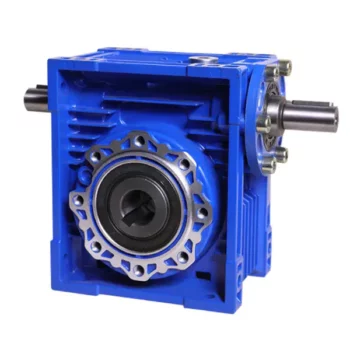
What are the Noise Levels Associated with Worm Gearboxes?
The noise levels associated with worm gearboxes can vary depending on several factors, including the design, quality, operating conditions, and maintenance of the gearbox. Here are some key points to consider:
- Design and Quality: Well-designed and high-quality worm gearboxes tend to produce lower noise levels. Factors such as gear tooth profile, precision manufacturing, and proper alignment can contribute to reduced noise.
- Gear Engagement: The way the worm and worm wheel engage and mesh with each other can impact noise levels. Proper tooth contact and alignment can help minimize noise during operation.
- Lubrication: Inadequate or improper lubrication can lead to increased friction and wear, resulting in higher noise levels. Using the recommended lubricant and maintaining proper lubrication levels are important for noise reduction.
- Operating Conditions: Operating the gearbox within its specified load and speed limits can help prevent excessive noise generation. Overloading or operating at high speeds beyond the gearbox’s capabilities can lead to increased noise.
- Backlash: Excessive backlash or play between the gear teeth can lead to impact noise as the teeth engage. Proper backlash adjustment can help mitigate this issue.
- Maintenance: Regular maintenance, including gear inspection, lubrication checks, and addressing any wear or damage, can help keep noise levels in check.
It’s important to note that while worm gearboxes can produce some noise due to the nature of gear meshing, proper design, maintenance, and operation can significantly reduce noise levels. If noise is a concern for your application, consulting with gearbox manufacturers and experts can provide insights into selecting the right gearbox type and implementing measures to minimize noise.
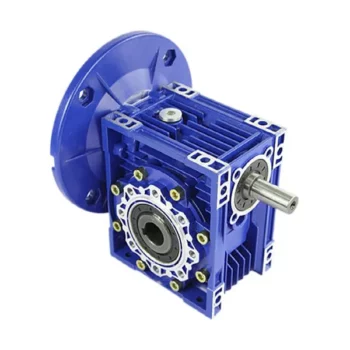
Energy Efficiency of a Worm Gearbox: What to Expect
The energy efficiency of a worm gearbox is an important factor to consider when evaluating its performance. Here’s what you can expect in terms of energy efficiency:
- Typical Efficiency Range: Worm gearboxes are known for their compact size and high gear reduction capabilities, but they can exhibit lower energy efficiency compared to other types of gearboxes. The efficiency of a worm gearbox typically falls in the range of 50% to 90%, depending on various factors such as design, manufacturing quality, lubrication, and load conditions.
- Inherent Losses: Worm gearboxes inherently involve sliding contact between the worm and worm wheel. This sliding contact generates friction, leading to energy losses in the form of heat. The sliding action also contributes to lower efficiency when compared to gearboxes with rolling contact.
- Helical-Worm Design: Some manufacturers offer helical-worm gearbox designs that combine elements of helical and worm gearing. These designs aim to improve efficiency by incorporating helical gears in the reduction stage, which can lead to higher efficiency compared to traditional worm gearboxes.
- Lubrication: Proper lubrication plays a significant role in minimizing friction and improving energy efficiency. Using high-quality lubricants and ensuring the gearbox is adequately lubricated can help reduce losses due to friction.
- Application Considerations: While worm gearboxes might have lower energy efficiency compared to other types of gearboxes, they still offer advantages in terms of compactness, high torque transmission, and simplicity. Therefore, the decision to use a worm gearbox should consider the specific requirements of the application, including the trade-off between energy efficiency and other performance factors.
When selecting a worm gearbox, it’s essential to consider the trade-offs between energy efficiency, torque transmission, gearbox size, and the specific needs of the application. Regular maintenance, proper lubrication, and selecting a well-designed gearbox can contribute to achieving the best possible energy efficiency within the limitations of worm gearbox technology.
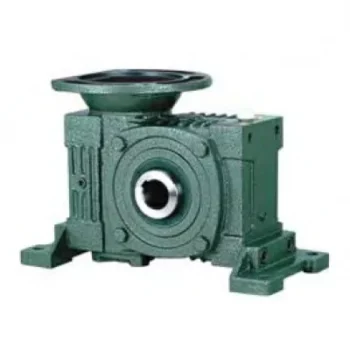
What Industries Commonly Use Worm Reducers?
Worm reducers are versatile mechanical components that find applications in various industries due to their unique advantages and capabilities. Some of the industries that commonly use worm reducers include:
- Material Handling: Worm reducers are widely used in material handling equipment such as conveyors, bucket elevators, and cranes to control movement and manage heavy loads.
- Automotive: They are utilized in automotive manufacturing processes, assembly lines, and vehicle positioning systems.
- Food and Beverage: Worm reducers are used in food processing and packaging machinery where hygiene and cleanliness are crucial.
- Agriculture: Agricultural equipment like irrigation systems and tractors use worm reducers for controlling rotational motion.
- Mining and Construction: Heavy-duty applications in mining equipment, excavators, and construction machinery benefit from the torque multiplication provided by worm reducers.
- Energy: Wind turbines and solar tracking systems use worm reducers to convert low-speed, high-torque motion into rotational energy.
- Textile: Textile machinery employs worm reducers for controlling speed and tension in weaving and spinning operations.
- Packaging: Packaging equipment relies on worm reducers for precise movement and positioning of packaging materials.
- Medical: Medical devices and equipment often utilize worm reducers for their accuracy and controlled motion.
- Printing: Printing machines use worm reducers to regulate paper feed and ensure consistent printing quality.
Worm reducers’ ability to provide high torque output, compact design, and self-locking characteristics makes them suitable for applications requiring reliable and controlled motion across various industries.


editor by CX 2024-01-08