Underground mining subjects mechanical equipment to the most extreme combination of environmental stresses in any industrial application: explosive methane-air atmospheres (coal mines), continuous water ingress from ground seepage (every underground mine), abrasive rock dust and mineral fines at concentrations 10-100× surface-level industrial environments, confined installation spaces where equipment must fit within tunnel profiles as small as 2.5 × 3 metres, and remote locations underground where maintenance access may require 30-90 minutes of travel from the surface workshop. The worm gear reducer serves underground mining at conveyor head and tail drives, incline belt anti-runback devices, mine ventilation fan and damper drives, sump pump drives, gate and door actuators, and various face equipment auxiliary positions.
The self-locking characteristic is particularly critical underground: incline conveyors transporting ore, coal or waste rock up gradients of 10-25° must not run backward if the motor fails or power is lost — backward runaway of a loaded incline belt is one of the most dangerous mechanical failure modes in underground mining, capable of producing high-speed belt reversal, equipment destruction and fatal injury to personnel in the belt travel path. The worm gear reducer self-locking at ratio ≥30 provides passive anti-runback that operates instantly, without electrical power, without control system intervention, and without brake engagement — a geometric safety feature that is always present and cannot be defeated by any single equipment failure. This article walks methane ATEX compliance, water and dust defense, incline conveyor anti-runback, ventilation drives, and sized recommendations for the major underground mining categories.
ATEX Methane Gas Zone 1 Compliance for Coal Mines
Coal mines generate methane (CH₄) from the coal seam as mining progresses. Methane is explosive at 5-15% concentration in air, with a minimum ignition energy of only 0.28 mJ — orders of magnitude lower than cotton or polymer dust. The entire underground coal mine working area is typically classified as ATEX Zone 1 (explosive atmosphere likely to occur in normal operation) for methane gas, Group I (mining). Every piece of electrical and mechanical equipment used underground must carry ATEX Group I M2 certification (or equivalent: MSHA approval in the USA, MA certification in China, KOSHA certification in Korea) — a certification level more demanding than surface industrial Zone 1 because the consequences of an underground methane explosion are catastrophic.
The worm gear reducer contribution to ATEX Group I compliance focuses on three requirements. First, maximum surface temperature: the housing surface temperature must not exceed 150 °C (T4 temperature class) under any operating condition including overload and stall — because methane auto-ignites at 537 °C, and the T4 limit includes a substantial safety margin plus consideration for local hot spots from bearing failure. Second, housing material must be non-sparking: cast iron is acceptable (ferrous-on-ferrous contact does not produce incendive sparks for Group I methane); aluminum is prohibited because aluminum-oxide-on-steel friction can produce thermite-type incendive sparks. Third, surface finish must prevent frictional ignition from trapped particles: smooth surfaces without crevices that could trap coal fines and generate frictional heating during operation. These three requirements — temperature, material and surface — apply to every pangpamenos sa gear sa ulod installed underground in a gassy coal mine, regardless of drive function.
Water Ingress and Rock Dust Contamination Defense
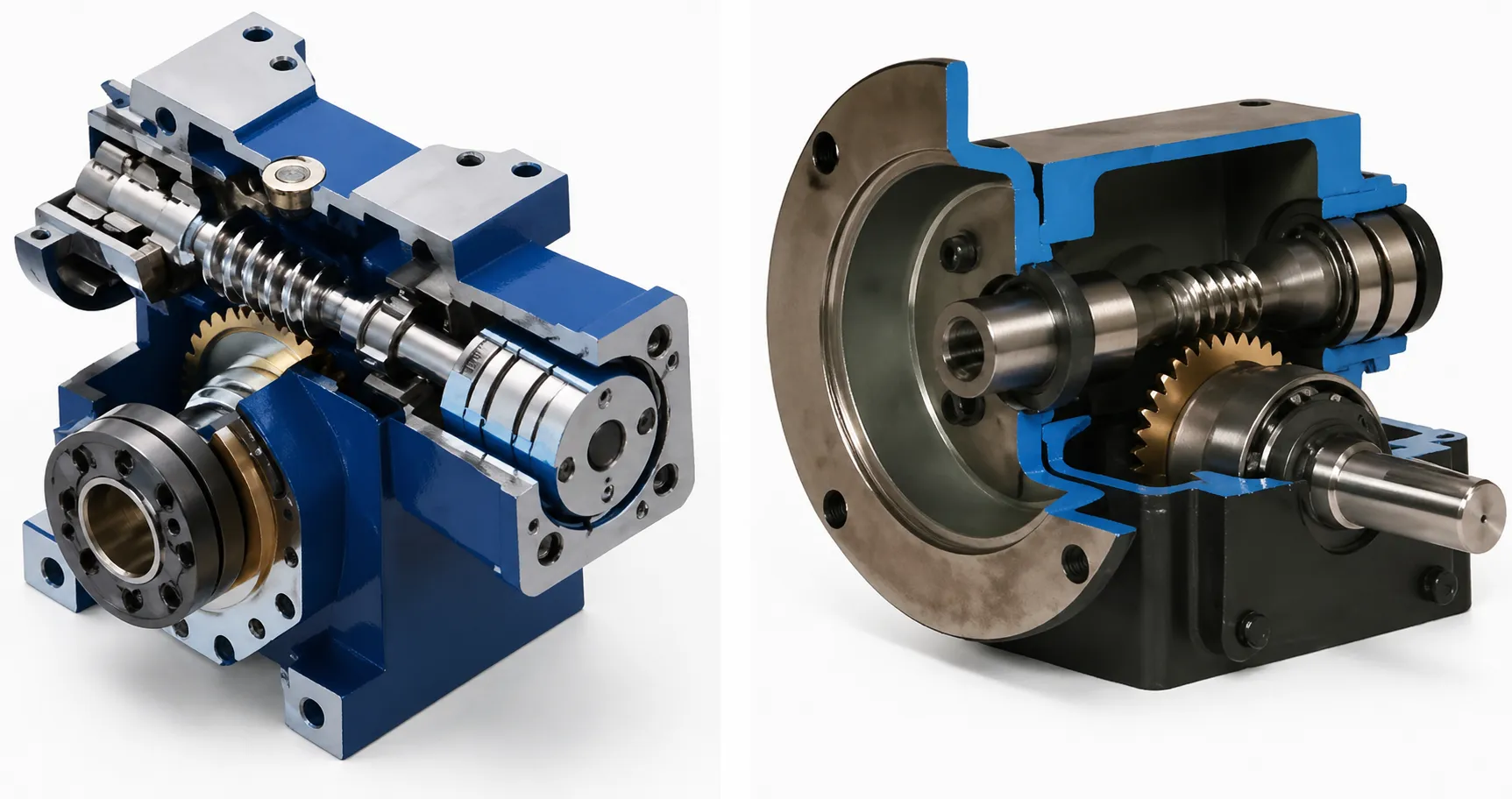
Every underground mine has water — from ground seepage, from dust suppression spray systems, from hydraulic equipment leaks, and from dewatering pump discharge. Worm gear reducer units on conveyor tail drives, sump pump drives and face equipment operate in continuous water spray or intermittent flooding. IP67 is the minimum sealing specification for underground mine worm gear reducer; IP68 is required for sump pump drives and any position in low-lying areas subject to periodic flooding during pump failure events. The sealing system mirrors marine practice: double O-ring housing joints, FKM shaft seals with secondary exclusion lip, sealed PTFE membrane breather with water-resistant housing, and 316L stainless external fasteners (standard zinc-plated bolts corrode rapidly in the acidic mine water environment at pH 3-6).
Rock dust contamination in underground mining is more severe than any surface industrial environment. Blasting, drilling, cutting and conveyor transfer generate airborne rock particles at concentrations of 5-50 mg/m³ continuously, with peak concentrations of 100-500 mg/m³ during blasting and material transfer. Rock dust (quartz, feldspar, calcite at Mohs hardness 6-7) is harder than oxide scale in steel mills and more abrasive than cotton lint in textile mills — making it the most aggressive particulate environment for worm gear reducer seals and bearings. The defense system requires: triple-lip FKM seals with hardened stainless steel dust deflector, replaceable felt collar pre-filter (replacement every 3-6 months underground), sealed desiccant breather with metal mesh pre-filter, and high-build epoxy coating (300-400 μm) to resist physical impact from rock fragments during blasting and material handling.
Incline Conveyor Anti-Runback — The Critical Safety Function
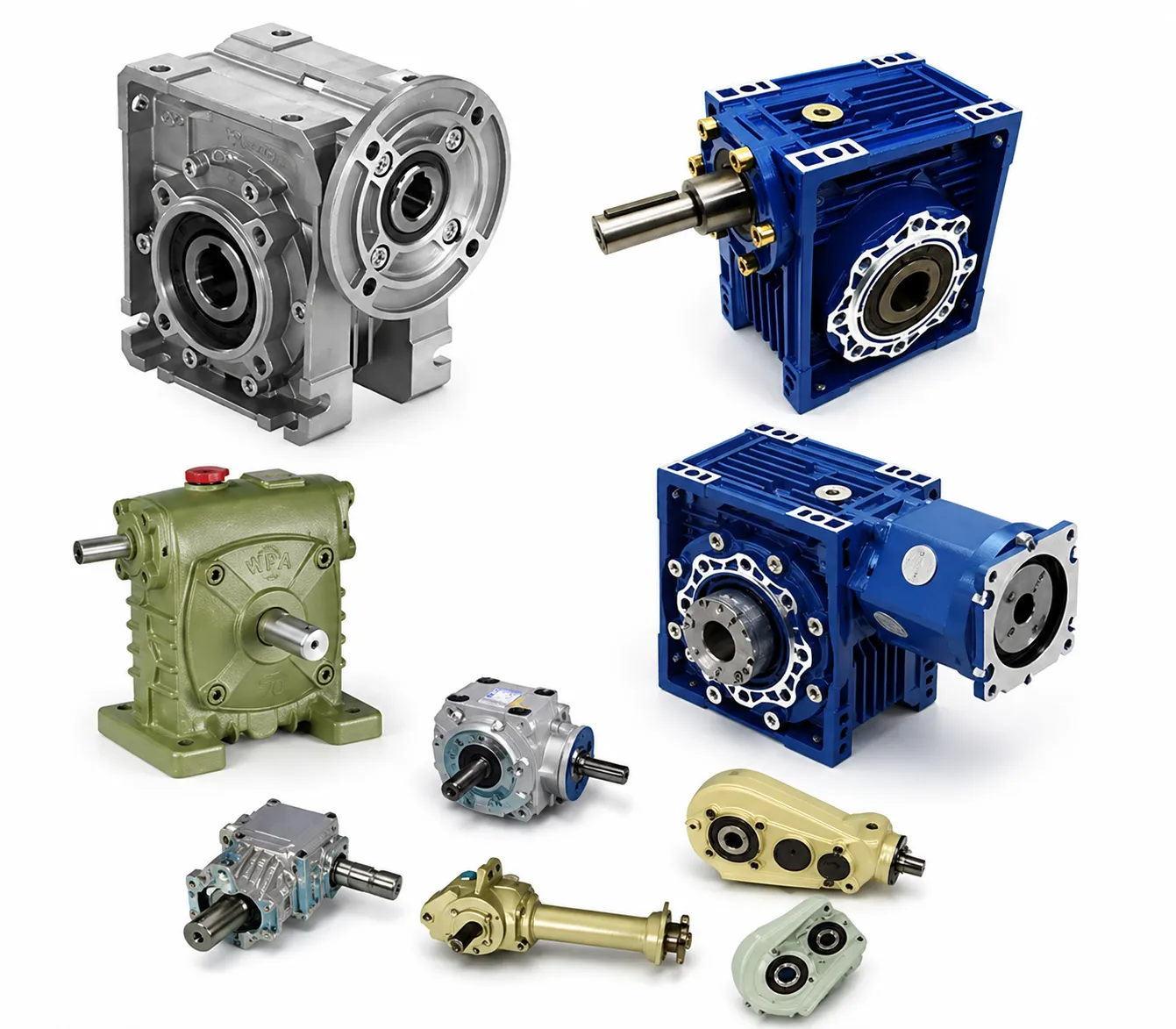
Underground mine incline conveyors transport material up gradients of 10-25° over lengths of 100-2,000 metres. A loaded incline belt at 18° gradient carrying 500 tonnes/hour of coal or ore contains enormous gravitational potential energy — if the drive motor fails and the belt runs backward, the loaded belt accelerates to speeds exceeding the rated forward speed within seconds, generating forces that can destroy the belt structure, scatter material along the tunnel, and cause fatal injuries to anyone in the belt line. Anti-runback protection is mandatory on every incline conveyor in underground mining.
The worm gear reducer self-locking at ratio ≥30 provides passive anti-runback as a geometric characteristic of the drive — the loaded belt cannot force the worm gear reducer output shaft backward regardless of the gravitational force. This passive protection supplements (but does not replace) the mechanical backstop or holdback clutch required by mine safety regulations on incline conveyors. The redundancy is important: if the mechanical backstop fails (ratchet pawl breakage, spring failure), the worm gear reducer self-locking provides the backup anti-runback. If the worm mesh fails (tooth breakage — extremely rare), the mechanical backstop provides the backup. Two independent anti-runback mechanisms operating on different physical principles reduce the probability of simultaneous failure to below 10⁻⁸ per year — meeting the safety integrity level required for personnel protection in underground mining.
Mine Ventilation Fan and Damper Drives
Underground mine ventilation is a life-safety system — diluting methane below explosive concentration, providing breathable air to the working face, and removing blasting fumes, diesel exhaust and heat. Ventilation control uses motorised dampers and regulators at critical points in the ventilation circuit to direct airflow to active working areas and reduce airflow to abandoned sections. The worm gear reducer on each ventilation damper actuator must provide self-locking position hold — the damper stays at its commanded position through power interruptions without drifting, maintaining the ventilation circuit balance that keeps methane concentration below safe limits. A damper that drifts open into an abandoned section diverts airflow away from the active face, potentially allowing methane to accumulate to dangerous levels.
Main ventilation fan drives at the mine shaft operate 24/7/365 at 75-500 kW — these large drives use helical or planetary gearboxes. However, auxiliary booster fans (15-75 kW) at intermediate points in the ventilation circuit frequently use pangpamenos sa gear sa ulod drives for the combination of compact size (fitting within the tunnel cross-section), self-locking (preventing fan windmilling when the motor stops — which would reverse airflow through the fan and disrupt the ventilation circuit), and ATEX Group I compliance. The booster fan worm gear reducer operates at high duty factor (20-24 h/day) in the mine atmosphere — requiring the full suite of methane ATEX, water, and dust defense specifications.
Underground Spare Parts Strategy and Rapid Swap Protocol
The single most important difference between underground and surface worm gear reducer fleet management is access time. A surface factory maintenance technician can retrieve a spare gearbox from the workshop stores in 5-10 minutes. An underground mine technician must travel 30-90 minutes from the surface workshop to the equipment location, carrying the replacement unit through confined tunnels, often on foot or by mine car. If the spare unit is not pre-positioned at an underground storage point near the working section, the total replacement time (surface retrieval + underground travel + swap + return) extends to 3-6 hours — versus 1-2 hours for the same swap on surface equipment. This access time penalty makes pre-positioning critical: maintain 2-3 complete spare worm gear reducer units per standardised frame family at underground storage stations within 10-15 minutes of the active working sections.
The rapid swap protocol for underground mine worm gear reducer drives follows the same principle as steel mill hot-swap carts: pre-assembled, pre-filled worm gear reducer replacement units ready for immediate installation. The failed unit is removed, the pre-filled spare is bolted in place, motor connections are restored, and the drive is returned to service — all within 45-90 minutes at the equipment location. The failed unit is then returned to the surface workshop for overhaul during the next personnel transport cycle. This worm gear reducer swap-and-return approach minimises production downtime to the mechanical swap time only, avoiding the extended delay of in-situ repair underground where access to tools, lighting and working space is severely constrained compared to a surface workshop environment.
Standardisation across the underground worm gear reducer fleet is even more beneficial than in surface operations. A mine operating 50-100 positions standardised on 2-3 frame families (for example, NMRV 063 for ventilation dampers and gates, WPDS 175 for booster fans and small conveyors, WPDS 250 for incline conveyor head drives) maintains a total underground spare inventory of 6-9 units — covering every worm gear reducer position in the mine with a single trip to the nearest underground storage station. Without standardisation, the spare inventory balloons to 15-25 variants, many of which will never be needed while the critical variant is missing when the failure occurs. The inventory capital for 6-9 standardised worm gear reducer spares runs $15,000-$30,000 — trivial against the $50,000-$200,000 per shift cost of conveyor or ventilation system downtime in an active underground mine production section.
Sizing for Common Underground Mining Drives
◎ MINE 01
Incline conveyor head drive + anti-runback
Motor 11-75 kW. Belt speed 2-4 m/s. Frame WPDS 200+. SF 1.6-2.0 for lump loading shock. Self-locking anti-runback. ATEX Group I M2 (coal). IP67. Triple-lip FKM + felt collar. 24/7.
◎ MINE 02
Ventilation damper and regulator actuator
Motor 0.37-3 kW. Quarter-turn 0-90°. Frame NMRV 050-WPA 110. Self-locking critical for ventilation circuit balance. ATEX Group I. IP67. Low cycle (5-50/day). Manual override for emergency.
◎ MINE 03
Booster ventilation fan
Motor 15-75 kW. Fan speed 300-900 rpm. Frame WPDS 175-250. Self-locking prevents windmilling on stop. ATEX Group I. IP66. Continuous 20-24 h/day. Dust + humidity defense.
◎ MINE 04
Sump pump drive
Motor 3-22 kW. IP68 submersible rating. Frame WPA 130-WPDS 200. Acidic mine water pH 3-6 — 316L fasteners + acid-resistant coating. FKM for acid resistance. Self-locking prevents back-siphon.
◎ MINE 05
Gate, door and refuge chamber actuator
Motor 0.37-2.2 kW. Frame NMRV 050-075. Self-locking holds ventilation door position. ATEX Group I. Battery-backup for refuge chamber emergency door. IP67. Ultra-compact for tunnel profile clearance.
Common Underground Mining Drive Mistakes
Aluminum housing in coal mine ATEX Zone 1
Aluminum-on-steel friction produces thermite-type sparks that can ignite methane. Cast iron is mandatory for ATEX Group I mining. Lightweight aluminum NMRV frames — standard on surface applications — are prohibited underground in gassy coal mines.
IP54 on equipment subject to mine flooding
Mine sumps flood when dewatering pumps fail — IP54 allows water ingress within minutes. IP67 minimum for general underground use; IP68 for sump-level positions. One flooding event with IP54 sealing destroys bearings and lubricant irreversibly.
Ratio below 30 on incline conveyor drive
Non-self-locking ratio compromises the anti-runback safety function. Every incline conveyor worm gear reducer must be ratio ≥30 with verified self-locking test certificate — no exceptions for efficiency optimisation.
Standard felt collar replacement at annual intervals
Underground rock dust concentration exceeds surface by 10-100×. Felt collar replacement every 3-6 months is necessary underground — annual replacement (adequate in surface textile or plastics service) allows months of unfiltered dust ingress that accelerates seal and bearing failure.
Underground Mining Worm Gear Reducer FAQ
Q: How many worm gear reducer positions does a typical underground mine operate?
A: A mid-size underground coal mine with 3-5 km of active development operates 30-80 worm gear reducer positions: 8-20 conveyor head/tail drives and anti-runback units, 10-30 ventilation damper and regulator actuators, 4-10 booster fan drives, 3-8 sump pump drives, and 5-15 gate, door and auxiliary drives. A large longwall coal mine may operate 100-200 positions. Hard rock metal mines typically operate 20-50 positions (fewer conveyors, more haul trucks, but similar ventilation and dewatering demands).
Q: What service life is expected underground?
A: Properly specified (ATEX Group I, IP67-68, triple-lip FKM, felt collar replaced every 3-6 months, synthetic PAG, high-build coating, 316L fasteners): 5-8 years on conveyor drives, 8-12 years on ventilation dampers (lower mechanical loading). Under-specified (surface industrial specification deployed underground): 3-12 months. The extreme environment shortens all equipment life underground — the 5-8 year properly-specified life is excellent by underground mining standards and typically matches the mine development plan for the working area where the equipment is installed.
Q: What maintenance schedule applies underground?
A: Weekly: visual inspection during statutory safety inspection rounds. Monthly: oil level verification, felt collar condition check. Every 3-6 months: felt collar replacement. Every 6-12 months: oil sample analysis (water, dust particles, viscosity, wear metals). Every 12-18 months: oil replacement (synthetic PAG). Every 3-5 years: bearing vibration analysis on high-duty conveyor positions. All maintenance must accommodate the 30-90 minute underground travel time — pre-staged spare units at underground storage locations reduce the production impact of replacement events.
Q: Does hard rock (non-coal) mining require ATEX?
A: Hard rock metal mines (gold, copper, nickel, zinc) generally do not generate methane and are not classified as ATEX Zone 1 for gas. However, some hard rock mines encounter geological methane pockets, and some potash and salt mines generate methane from organic inclusions. In non-gassy hard rock mines, the ATEX requirement is relaxed — cast iron remains standard but aluminum may be acceptable, and T-class surface temperature verification is not required. The water, dust and SF requirements remain identical to coal mine specification — the mechanical environment is equally severe regardless of gas classification.
Q: How do I get a sized recommendation for my underground mine?
A: Send our engineering team the mine details: mine type (coal, hard rock, potash), gas classification (gassy/non-gassy), drive positions (conveyor, fan, damper, pump, gate), motor power per position, incline gradient (for conveyors), water exposure level, dust environment severity, and applicable mining safety standard (MSHA, KOSHA, DGMS). We return sized recommendations with ATEX verification, anti-runback certification and mine-grade specification within 48-72 hours.
Sourcing Worm Gear Reducer for Underground Mining?
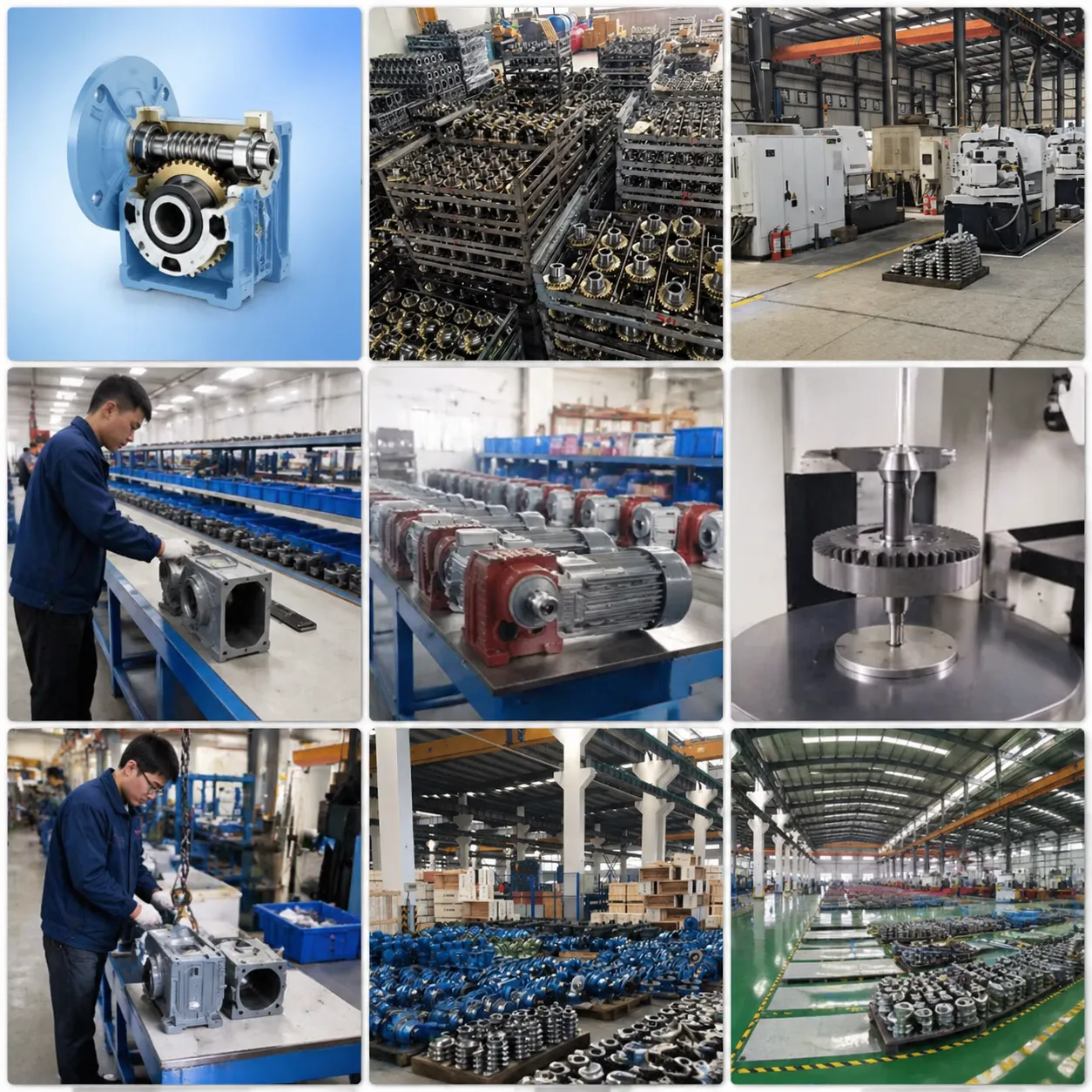
Send us mine type, gas classification, drive positions and incline gradient. Our Korean engineering team returns sized recommendations with ATEX and anti-runback certification within 48-72 hours.
Editor: Cxm