The steel can be used for high strength worm gears (worm wheel) and steel could be plain carbon steel or alloy steel. The steel gears are usually heat treated in order to combine properly the toughness and tooth hardness.
The phosphor bronze is widely used for worms drive so that you can reduce wear of the worms which is excessive with cast iron or steel.
Worm gear sets are usually used to reduce speed and maximize torque. Because the worm drive undergoes more contact stress cycles than the worm equipment, the worm drive is often of a better material.
• Cast iron provides toughness and ease of manufacture.
• Cast steel provides a lot easier fabrication, strong operating loads and vibration resistance.
• Carbon steels are economical and strong, but are susceptible to corrosion.
• Aluminum is used when low gear inertia with some resiliency is necessary.
• Brass is inexpensive, simple to mold and corrosion tolerant.
• Copper is easily formed, conductive and corrosion resilient. The gear’s power would enhance if bronzed.
• Plastic is inexpensive, corrosion resistant, noiseless operationally and can overcome missing tooth or misalignment. Plastic is less robust than steel and is vulnerable to temperature adjustments and chemical substance corrosion. Acetal, delrin, nylon, and polycarbonate plastics are common.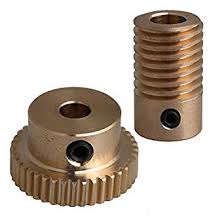
This 27 tooth brass worm gear will be used with a worm gear to make a 27:1 decrease in speed while also changing the orientation of the rotating axis by 90 degrees. This gear fastens to a 1/4″ shaft using a specialised 1/4″ D-hub to be used with 1/4″ D-shaft.
The manufacturing methods of worms are roughly divided among cutting, heat treated and ground after cutting and rolling. And for worm wheels, they could be approximately divided among cutting teeth, cutting pearly whites after casting, and tooth cutting after the outdoors rim is normally cast around the guts of the blank.