When you feed in DC, the electromagnet works like a conventional permanent magnet and generates a magnetic field that’s always pointing in the same direction. The commutator reverses the coil current every time the coil flips over, just like in a simple DC motor, so the coil always spins in the same path.
When you feed in AC, however, the current moving through the electromagnet and the existing flowing through the coil both reverse, exactly in step, so the force on the coil is always in the same direction and the engine always spins possibly clockwise or counter-clockwise. What about the commutator? The frequency of the current changes much faster compared to the electric motor rotates and, since the field and the existing are always in stage, it doesn’t actually matter what placement the commutator is definitely in at any provided moment.
Small electric motors are found in a wide variety of applications in nearly every industry because they’re cleaner and less expensive to run than fuel-powered motors. They remain able to operate at high speeds and successfully produce mechanical power; nonetheless it will maintain much smaller amounts in comparison to larger electric motors. Little motors or miniature motors are typically used in welding, small centrifuge devices, pitching machines, wheel chair, door openers, pumps, and frozen yogurt devices. Another common usage of small electrical motors is in the automobile accessory industry in which EP motors are accustomed to power products such as electric home windows, windscreen wipers, mirrors and locking systems. In some cases, motors can be categorized as fractional horsepower motors also if the horsepower exceeds one unit. If the framework size of the electric motor is a 42, 48, or 56, the main one horsepower guideline does not apply. Because of their size, it may at times be easier to just replace a electric motor than to try and repair it, but because they are basic contraptions, small electrical motors are reliable pieces of equipment when used for his or her intended purposes.
DC motors such as this are excellent for battery-powered toys (things like model trains, radio-controlled cars, or electric shavers), nevertheless, you don’t find them in many household appliances. Small appliances (things like coffee grinders or electric food blenders) have a tendency to use what are known as universal motors, which can be powered by either AC or DC. Unlike a simple DC electric motor, a universal motor comes with an electromagnet, instead of a permanent magnet, and it requires its power from the DC or AC power you feed in:
The small electric motor spins in various directions based about how the battery prospects are hooked up. These motors are typically single phase or three phase depending on required output and intended application. Factors to be made when determining EP motor make use of include: whether a electric motor will be needed for constant or intermittent duty, voltage rankings, desired weight of engine, fan-cooling, adjustable speeds etc. Like all electrical motors, small electric motors convert electricity 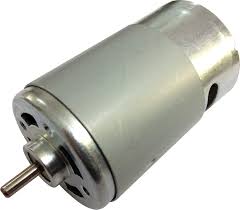 into mechanical energy. They change electrical energy into rotational movement by using the natural behavior of magnetism, or the attracting and repelling forces of a magnet strong enough to cause rotation. These small motors are typically low priced and easy maintenance options for motor needs.