Intervalos de cambio de aceite para reductores de engranajes helicoidales: Programas de cambio de aceite PAG vs Mineral CLP
Una guía práctica de programación que abarca los intervalos de referencia del catálogo, los cuatro factores que los acortan o alargan, la regla de temperatura de Arrhenius, los umbrales de análisis de aceite y el procedimiento de cambio paso a paso que maximiza la vida útil.
Obtén una recomendación sobre el programa de cambio de aceite →
Los intervalos de cambio de aceite del catálogo están diseñados para condiciones ideales; sin embargo, las instalaciones reales de reductores de engranajes helicoidales operan en condiciones que modifican el intervalo entre 1,5 y 3 veces. Si el intervalo es demasiado largo, el lubricante se degrada más allá del umbral de protección, acelerando el desgaste de las ruedas de bronce entre 2 y 5 veces. Si es demasiado corto, se incurre en gastos de capital y mano de obra en cambios que no ofrecen ningún beneficio en la vida útil del producto. El intervalo óptimo se encuentra entre estos dos extremos y depende de la temperatura de operación, la humedad ambiental, la entrada de contaminantes y el tipo de lubricante. El artículo a continuación explica los valores de referencia del catálogo, los cuatro factores que los modifican, la regla de temperatura que rige los cálculos, los umbrales de análisis de aceite y el procedimiento de cambio paso a paso.
INSTANTÁNEA DEL INTERVALO DE CAMBIO DE ACEITE
PAG SINTÉTICO ESTÁNDAR
8.000 horas
Aproximadamente 12 meses de servicio las 24 horas, los 7 días de la semana.
NORMA CLP PARA MINERALES
4.000 horas
Aproximadamente 6 meses de servicio las 24 horas del día, los 7 días de la semana.
USO INTENSO (cualquier aceite)
2.000 horas
caliente/húmedo/contaminado
Por qué los intervalos de cambio de aceite son importantes para la vida útil de un reductor de engranajes helicoidales
En un reductor de engranajes helicoidales, el lubricante protege simultáneamente tres superficies de contacto: el contacto deslizante de acero sobre bronce, los contactos de los rodamientos en los ejes de entrada y salida, y el contacto de acero sobre acero entre el eje del tornillo sin fin y sus cojinetes. Cada superficie de contacto tiene un requisito específico de espesor de película y un modo de degradación particular en caso de que la película falle. Los intervalos de cambio de aceite controlan la duración de la protección que el lubricante ofrece simultáneamente en las tres superficies de contacto.
A medida que el lubricante envejece, ocurren tres cosas en paralelo. La viscosidad cambia, generalmente aumentando a medida que la oxidación espesa el aceite base, y a veces disminuyendo si la fricción reduce el volumen del paquete de aditivos poliméricos. Los aditivos antidesgaste se agotan: el contacto deslizante consume los aditivos EP que protegen la superficie de bronce, y una vez agotados, el desgaste por rozamiento se acelera. Se acumulan partículas y contaminación por agua: incluso las carcasas selladas de los reductores de engranajes helicoidales absorben pequeñas cantidades de humedad y partículas de desgaste metálico con el tiempo, que actúan como contaminantes abrasivos una vez que la concentración supera un umbral.
El intervalo del catálogo describe cuándo esta degradación combinada alcanza el nivel en el que el coste de operación continua supera el coste de la reparación. Superar el intervalo del reductor de engranajes helicoidales conlleva una curva de costes cada vez más pronunciada: intervenciones de re-dientes de la rueda de bronce, sustitución de cojinetes e incluso rayado del eje en casos extremos. Operar muy por debajo del intervalo genera rendimientos decrecientes: cambiar el lubricante a las 2000 horas, cuando lo aceptable eran 6000, supone un gasto tres veces mayor en mano de obra para un beneficio de protección marginal.
Intervalos de referencia del catálogo: PAG frente a CLP mineral
Los intervalos de referencia del catálogo de reductores de engranajes helicoidales asumen un perfil de funcionamiento estándar: 8 horas diarias, temperatura ambiente de 20-25 °C, carcasa sellada sin entrada significativa de contaminantes y temperatura del aceite a 70 °C en estado estacionario. La siguiente matriz muestra las cifras de referencia típicas de fabricantes coreanos y asiáticos para las cuatro combinaciones de lubricante y temperatura que abarcan la mayoría de las instalaciones.
| Perfil de funcionamiento del lubricante | Intervalo del catálogo | Equivalente del calendario |
|---|---|---|
| PAG sintético, T_oil ≤ 70 °C | 12.000 horas | 18 meses continuos / 4 años de turno único |
| PAG sintético, T_oil 70-85 °C | 8.000 horas | 12 meses continuos / 3 años de turno único |
| PAG sintético, T_oil > 85 °C | 4.000 horas | 6 meses continuos / 2 años turno único |
| Mineral CLP, T_oil ≤ 70 °C | 6.000 horas | 9 meses continuos / 2 años turno único |
| Mineral CLP, T_oil 70-80 °C | 4.000 horas | 6 meses continuos / 18 meses de turno único |
| Mineral CLP, T_oil > 80 °C | 2.000 horas | 3 meses continuos / 12 meses de turno único |
Los intervalos de cambio de aceite del reductor de engranajes helicoidales se acortan drásticamente una vez que la temperatura del aceite supera el umbral específico del lubricante (85 °C para PAG y 80 °C para aceites minerales). La tasa de degradación exponencial a temperaturas elevadas se describe mediante la regla de Arrhenius, que se explica en la sección sobre el impacto de la temperatura más adelante.
Cuatro factores que acortan o alargan el intervalo
El modelo base del catálogo parte de un perfil de funcionamiento específico; las desviaciones de dicho perfil acortan o alargan el intervalo real de cambio de aceite del reductor de engranajes helicoidales. Cuatro factores son determinantes; cada uno tiene un rango de ajuste típico que los ingenieros pueden aplicar en comparación con el modelo base para proyectar el intervalo para su instalación específica.
desviación de la temperatura del aceite
Factor dominante. Cada 10 °C por encima de 70 °C reduce a la mitad el intervalo (regla de Arrhenius). 5 °C por debajo extiende ~30%.
Rango: ×0,25 (calor extremo) a ×1,5 (ambiente fresco)
Continuo versus intermitente
Los intervalos basados en el calendario son importantes para el funcionamiento intermitente, ya que el lubricante se deteriora incluso cuando está parado. Un funcionamiento de ≤8 horas amplía las horas operativas que se pueden lograr por cambio.
Rango: ×1,0 (continuo) a ×1,4 (turno único)
Entrada de humedad y polvo
Los entornos marinos, de lavado de alimentos y mineros polvorientos provocan que la contaminación supere la capacidad del sello. Reduce el intervalo en 30-60%.
Rango: ×0,4 (grave) a ×1,0 (sellado)
Potencia operativa frente a la del catálogo
Funcionar a 60% de potencia nominal produce menos calor y un agotamiento más lento de los aditivos. Funcionar por encima de 100% invierte el cálculo.
Rango: ×0,7 (sobrecarga) a ×1,3 (carga ligera)
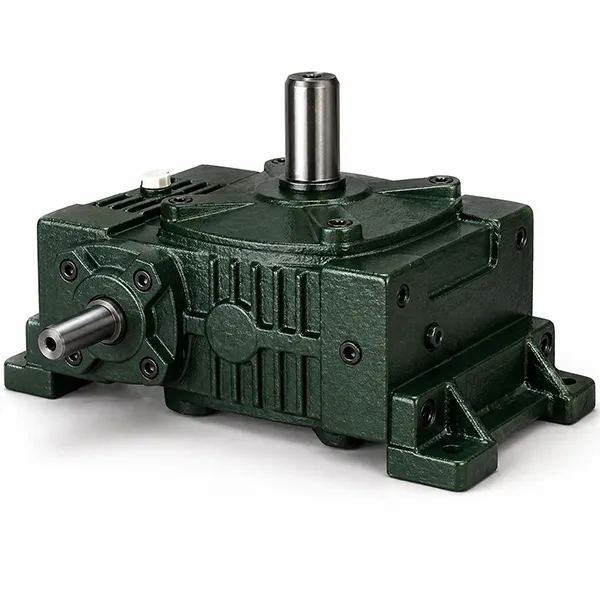
Impacto de la temperatura de funcionamiento: la regla de duplicación de Arrhenius
Entre los cuatro factores de ajuste del reductor de engranajes helicoidales, la temperatura del aceite es el factor más determinante. La ecuación de Arrhenius rige las velocidades de reacción química; aplicada a la oxidación del lubricante, produce una duplicación aproximada de la tasa de degradación por cada aumento de 10 °C por encima del valor de referencia del catálogo. La siguiente visualización muestra lo que esto implica para la proyección del intervalo real en todo el rango de operación.
INTERVALO PROYECTADO vs. TEMPERATURA DEL ACEITE (PAG SINTÉTICO, LÍNEA BASE = 12.000 h A 70 °C)
Extensión +50% por debajo de la línea base (ambiente frío)
Referencia base del catálogo
Se reduce a la mitad a +10 K (Arrhenius)
Trimestralmente en +20 K — cambio cada 4-5 meses continuo
Octavo a +30 K: fallo de la película inminente; abordar primero la causa térmica.
Implicaciones de ingeniería: Reducir la temperatura del aceite en 10 K mediante refrigeración forzada o un tamaño de bastidor mayor duplica el intervalo alcanzable, lo que suele ser una decisión económicamente más acertada que simplemente cambiar el aceite con mayor frecuencia.
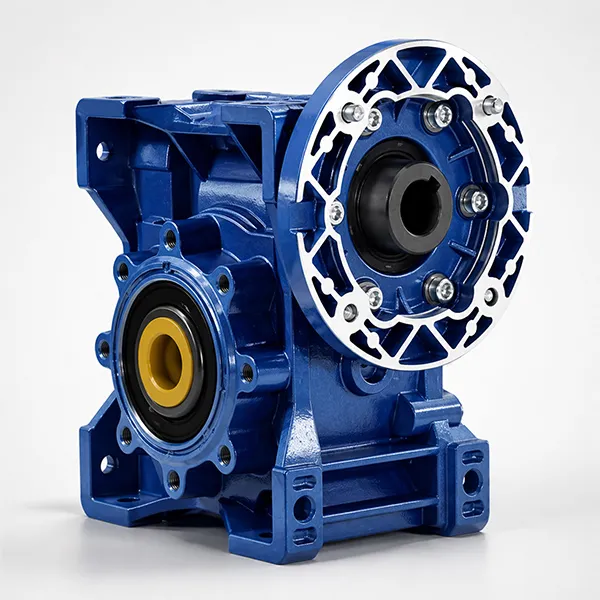
Indicadores de análisis de aceite: TAN, viscosidad, agua, partículas.
Para instalaciones de reductores de engranajes helicoidales donde los intervalos basados en calendario no se ajustan al perfil operativo, el análisis de aceite proporciona indicadores de reemplazo basados en la condición. Cinco parámetros cubren los modos de degradación dominantes; cada uno tiene un método de prueba definido por ASTM y un valor umbral por encima del cual se indica el reemplazo inmediato. Los servicios de suscripción de análisis de aceite cuestan entre 35 y 60 USD por muestra con un plazo de entrega de 5 a 7 días, lo que resulta económico en instalaciones donde el costo del aceite supera los 200 USD por cambio. El análisis de partículas de desgaste de bronce monitorea específicamente la condición del par tornillo sin fin sobre rueda; para la química de desgaste detrás de las partículas, consulte las notas relacionadas en comportamiento del par de desgaste de tornillo sin fin y rueda.
| Parámetro | Método de prueba | Reemplazar umbral |
|---|---|---|
| Cambio de viscosidad | ASTM D445 | ±10% de nuevo |
| TAN (Índice de Acidez Total) | ASTM D664 | +2,0 mg KOH/g |
| Contenido de agua | ASTM D6304 | > 500 ppm |
| Limpieza según la norma ISO 4406 | ISO 4406 | > 17/19/14 |
| Partículas de desgaste de Cu (bronce) | ASTM D5185 | > 50 ppm |
Superar cualquier umbral desencadena el cambio de aceite del reductor de engranajes helicoidales; superar dos simultáneamente sugiere una investigación de la causa raíz que va más allá del simple cambio de aceite (probablemente falla del sello, sobrecalentamiento o carga de choque). Establezca una línea base enviando aceite nuevo para análisis durante la instalación; las muestras posteriores se compararán con la línea base real de la instalación en lugar de con las suposiciones del catálogo.
Consideraciones para el primer cambio de aceite de rodaje
Un nuevo reductor de engranajes helicoidales incorpora lubricante de fábrica que absorbe las partículas metálicas liberadas durante el rodaje inicial, el breve periodo en el que la rueda de bronce y el tornillo sin fin de acero entran en contacto. La liberación de partículas durante el rodaje es de 5 a 15 veces mayor que en condiciones normales, lo que provoca que el lubricante de fábrica se contamine rápidamente con partículas abrasivas. El primer cambio de aceite se realiza considerablemente más rápido que los intervalos posteriores.
CRONOGRAMA DE CAMBIO DE ACEITE DE RODAJE
PRIMERAS 100-500 h
Primer cambio de aceite
Drene las partículas acumuladas. Inspeccione el imán del desagüe en busca de trozos mayores de 2 mm.
500-2000 horas
Estabilización
La tasa de desgaste disminuye hasta alcanzar un estado estacionario. Tomar una muestra de aceite a las 1000 horas para el análisis de referencia.
Más de 2000 horas
Intervalo estándar
Aplicar el intervalo de catálogo (4.000 / 8.000 / 12.000 h según la familia del lubricante).
Procedimiento paso a paso para el cambio de aceite
Un cambio de aceite correcto en un reductor de engranajes helicoidales requiere de 30 a 45 minutos por unidad, incluyendo el tiempo de drenaje. Omitir cualquier paso generalmente reduce la protección que ofrece el nuevo aceite: un drenaje incompleto, la contaminación durante el llenado o un grado de viscosidad incorrecto comprometen la eficacia del cambio. Los seis pasos que se describen a continuación cubren el procedimiento estándar para el mantenimiento de reductores de engranajes helicoidales industriales.
Ponga en marcha la unidad a temperatura ambiente antes de vaciarla.
Ponga en marcha el reductor de engranajes helicoidales durante 15-30 minutos justo antes de vaciar el aceite para que su temperatura alcance los 50-65 °C. El aceite caliente se drena de 4 a 6 veces más rápido y arrastra más contaminantes que el aceite frío.
Abra el tapón de drenaje y el respiradero simultáneamente.
Retire el tapón de drenaje situado en la parte inferior de la carcasa; abra la tapa de ventilación/llenado en la parte superior para permitir la entrada de aire y el drenaje completo. Deje que drene durante al menos 15 minutos. Inspeccione el tapón magnético para detectar la acumulación de residuos metálicos.
Muestra de aceite drenado para análisis (opcional pero recomendado)
Recoja 100 ml del desagüe en una botella limpia y etiquetada. Envíela a un laboratorio para su análisis y así verificar si el intervalo anterior fue correcto, demasiado corto o demasiado largo para la optimización del siguiente ciclo.
Enjuagar únicamente al cambiar de familia de lubricantes.
Para cambios de aceite de la misma familia (PAG a PAG, mineral a mineral), no es necesario enjuagar. Para cambios de familia, llene hasta 50% con aceite nuevo, haga funcionar durante 15 minutos y vuelva a drenar; repita el proceso una vez. Esto garantiza que el aceite residual de la otra familia sea inferior a 5%.
Rellenar hasta la marca del visor o el volumen especificado.
Vierta aceite nuevo a través de un embudo/filtro limpio (con capacidad para 10-15 µm). Deténgase en la línea central del visor o en el volumen especificado en el catálogo; un llenado excesivo aumenta las pérdidas por agitación y la temperatura del aceite; un llenado insuficiente expone la malla al funcionamiento en seco.
Déjelo funcionar durante 30 minutos y verifique la estabilización de la temperatura.
Reinicie el reductor de engranajes helicoidales en funcionamiento normal. Controle la temperatura del aceite durante los primeros 30 minutos; debería estabilizarse en el valor inicial ±5 °C. Una desviación significativa sugiere un error en el volumen de llenado, un grado de viscosidad incorrecto o un problema térmico incipiente.
Errores comunes en la gestión de intervalos
◈ERROR 01
Aplicar intervalo de calendario sin comprobar T_oil
Un intervalo de 12 000 h a T_oil 70 °C se convierte en 6 000 h a 80 °C y 3 000 h a 90 °C. Planificar el calendario sin datos de temperatura es una mera ilusión.
◈ERROR 02
Saltarse el cambio de entrada de llenado inicial
Las partículas presentes en el relleno de fábrica actúan como contaminantes abrasivos si no se drenan a las 100-500 horas. Si no se realiza el cambio de relleno durante el rodaje, el reductor de engranajes helicoidales sufre una reducción de la dureza en la superficie de bronce.
◈ERROR 03
Llenado excesivo más allá de la marca del visor
Agregar aceite extra “por seguridad” aumenta las pérdidas por agitación, eleva la temperatura del aceite entre 5 y 15 °C y acorta el intervalo entre ciclos. Deténgase al alcanzar el volumen especificado.
◈ERROR 04
Considerar el intervalo prolongado como libre de riesgos
Ampliar el intervalo de 8.000 horas a 10.000 horas "ahorra dinero en mano de obra", pero normalmente cuesta entre 2 y 3 veces más que ese ahorro debido al desgaste acelerado del bronce en la rueda helicoidal.
◈ERROR 05
Rellenar sin cambiar el filtro de ventilación
Un filtro de ventilación saturado permite el paso de aire húmedo directamente a la carcasa. Reemplace el filtro de ventilación al menos cada dos cambios de aceite; en ambientes polvorientos, reemplácelo en cada cambio.
Preguntas frecuentes sobre el cambio de aceite del reductor de engranajes helicoidales
P: ¿Puedo ampliar el intervalo del catálogo si el análisis de aceite muestra que el lubricante aún está en buen estado?
A: Sí, con un muestreo adecuado del aceite del reductor de engranajes helicoidales. Si dos muestras consecutivas en el intervalo del catálogo muestran que los cinco parámetros se encuentran cómodamente dentro de los umbrales (viscosidad dentro de ±5%, TAN por debajo de la mitad del umbral, agua por debajo de 250 ppm, ISO 4406 por debajo de 17/15/12, Cu por debajo de 25 ppm), el siguiente intervalo se puede extender en 25-50%. Continúe muestreando en cada intervalo para verificar; vuelva al catálogo si algún parámetro tiende a acercarse al umbral. La técnica es más rentable en instalaciones donde un solo cambio de aceite supera los 500 USD en materiales y mano de obra.
P: El aceite que drenó mi reductor de engranajes helicoidales tiene un color oscuro. ¿Significa eso que el intervalo de cambio fue demasiado largo?
A: El oscurecimiento visual por sí solo no es un indicador fiable del intervalo de cambio de un reductor de engranajes helicoidales. El CLP mineral se oscurece visiblemente durante su vida útil normal: el cambio de dorado a marrón es normal en el intervalo del catálogo, mientras que el cambio de marrón a negro indica que el intervalo fue demasiado largo. El PAG sintético no se oscurece mucho durante su vida útil normal; un cambio de color significativo en el PAG sugiere contaminación o daño térmico, en lugar de un envejecimiento normal. Utilice análisis de laboratorio (TAN, viscosidad) para una evaluación definitiva, en lugar de basarse en el color.
P: ¿Debo cambiar el aceite con más frecuencia en verano que en invierno?
R: Indirectamente sí, a través del factor de temperatura del reductor de engranajes helicoidales. Si la temperatura ambiente de verano eleva la temperatura del aceite 10 °C por encima de la de invierno, la regla de Arrhenius reduce a la mitad el intervalo alcanzable durante los meses de verano. Planificación práctica: elija la fecha de cambio del reductor de engranajes helicoidales a finales de verano (cuando el aceite haya acumulado el máximo envejecimiento térmico) para instalaciones sensibles a la temperatura ambiente estacional. Para instalaciones con climatización controlada donde la temperatura del aceite se mantiene constante durante todo el año, no es necesario ningún ajuste estacional.
P: ¿El funcionamiento del reductor de engranajes helicoidales a baja carga prolonga el intervalo de cambio de aceite?
A: Sí, modestamente. El funcionamiento a 50-70% de potencia de catálogo produce menos calor en la malla y un agotamiento más lento del aditivo que el funcionamiento a 100%. La extensión típica es de 1,2 a 1,4 veces el intervalo base con carga ligera. Sin embargo, el efecto se ve minimizado por el impacto de la temperatura: la carga ligera a alta temperatura ambiente (T_oil 85 °C) aún tiene un intervalo alcanzable más corto que la carga completa a baja temperatura ambiente (T_oil 65 °C). Aborde primero la temperatura; el factor de carga es un parámetro de ajuste secundario. Consulte nuestra Catálogo de reductores de engranajes helicoidales para marcos del tamaño adecuado a su perfil de trabajo.
P: ¿Cómo puedo detectar residuos en el tapón de drenaje magnético? ¿Qué es normal y qué es preocupante?
A: La fina capa de polvo gris bronceado que recubre uniformemente el tapón de drenaje del reductor de engranajes helicoidales es normal; se trata de micropartículas procedentes del desgaste normal de la malla e indican que el lubricante está cumpliendo su función protectora. Las escamas o trozos más grandes (visibles a simple vista, > 1-2 mm) señalan alguna anomalía: posible fractura de un diente de bronce, desgaste severo o fallo del sello que permite la entrada de residuos externos. Fotografie cualquier residuo sospechoso y envíelo al fabricante para su diagnóstico antes de volver a aplicar aceite nuevo. Seguir operando sin investigar la causa raíz suele provocar la destrucción del reductor de engranajes helicoidales en el siguiente intervalo de mantenimiento.
P: ¿Es aceptable rellenar el aceite en lugar de cambiarlo por completo entre intervalos?
A: El rellenado del reductor de engranajes helicoidales sirve para reponer el volumen perdido por fugas en el sello o evaporado, no para extender el intervalo de cambio. El rellenado repone el volumen perdido, pero no renueva el paquete de aditivos del aceite existente; los aditivos se siguen consumiendo según lo programado, independientemente de la cantidad de aceite nuevo que se añada en pequeñas cantidades. Los rellenados son adecuados para mantener el nivel en el visor; no sustituyen el cambio de volumen completo en el intervalo programado. Utilice la misma especificación de lubricante (misma familia, mismo grado de viscosidad, misma marca si es posible) para todos los rellenados.
¿Necesita un programa de cambio de aceite para su flota instalada?
Envíenos las especificaciones y el perfil de funcionamiento de su reductor de engranajes helicoidales: horas de servicio, temperatura ambiente, temperatura del aceite en estado estacionario y entorno de contaminación. Nuestro equipo de ingeniería coreano le enviará un programa de cambio de aceite personalizado con fechas, especificaciones del lubricante y un plan de muestreo para el análisis del aceite en un plazo de 24 a 48 horas.
Editor: Cxm