Pelumas Reducer Gigi Cacing: Sintetis PAG vs Mineral CLP
A side-by-side engineering comparison of synthetic polyalkylene glycol and mineral CLP gear oils — chemistry, properties, service-life economics, application matrix, switching rules, and the most common selection mistakes.
Lubricant choice changes worm gear reducer service life by a factor of 1.5-2× and changes operating efficiency by 3-5 percentage points. The two dominant lubricant families across modern Korean and Asian worm gear reducer installations — synthetic PAG (polyalkylene glycol) and mineral CLP — differ in friction coefficient, oxidation resistance, viscosity-temperature behaviour, water tolerance and unit cost. Choosing correctly between them sits at the centre of maintenance economics on continuous-duty drives. The article below walks through the engineering trade-offs, lifetime cost analysis, application matrix and the compatibility rules for switching between lubricant families.
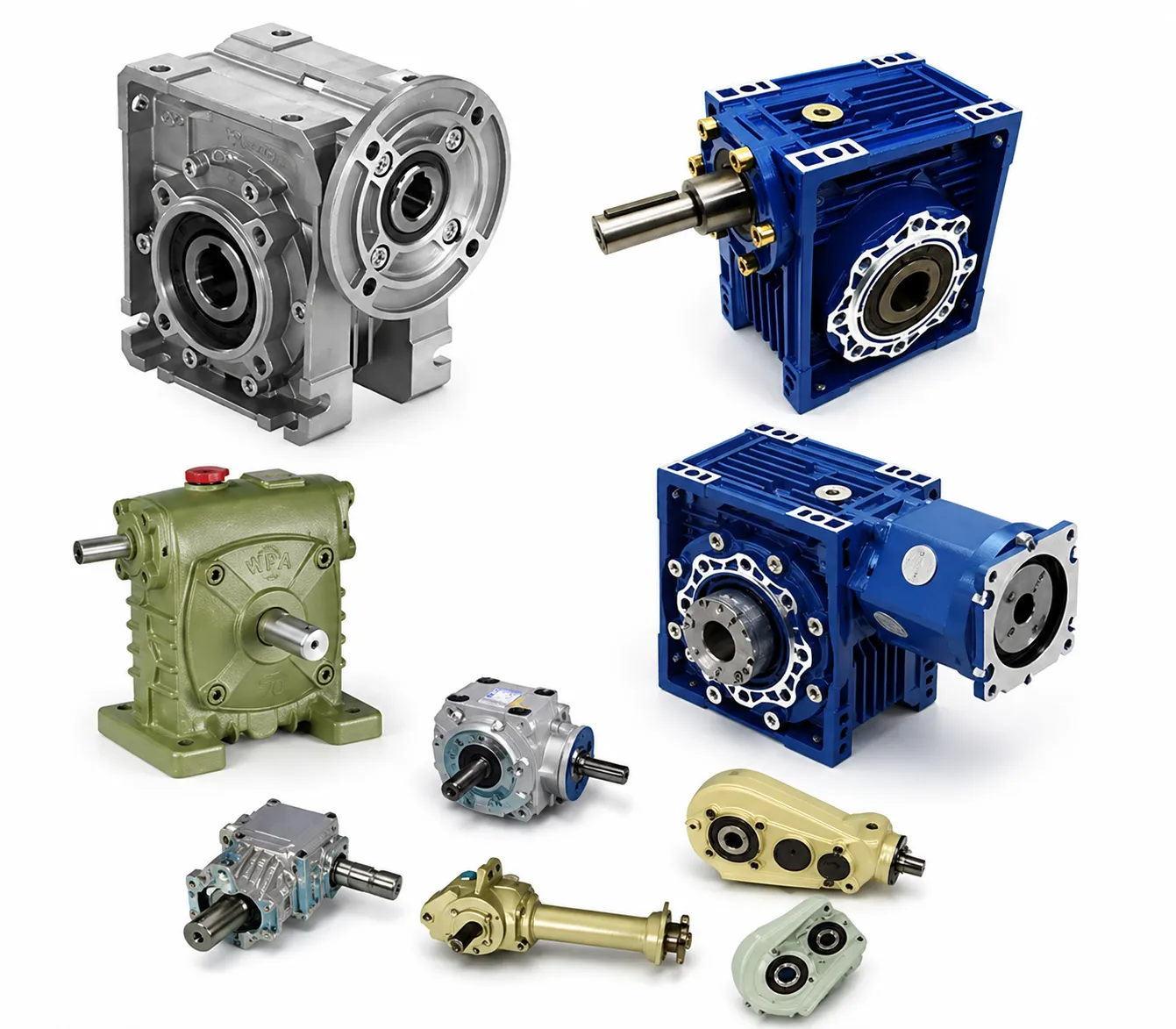
Polyalkylene Glycol
−(CH₂−CH₂−O)ₙ− backbone
- ▸ ISO VG: 220 (standard for worm)
- ▸ Service interval: 8,000 hours
- ▸ η benefit: +3-5 percentage points
- ▸ Cost: 3-4× mineral baseline
Mineral Paraffinic Base
Refined petroleum + EP additives
- ▸ ISO VG: 220 (standard for worm)
- ▸ Service interval: 4,000 hours
- ▸ η benefit: baseline (catalogue)
- ▸ Cost: baseline 1.0×
Why Lubricant Choice Matters More on Worm Gear Than on Helical or Planetary
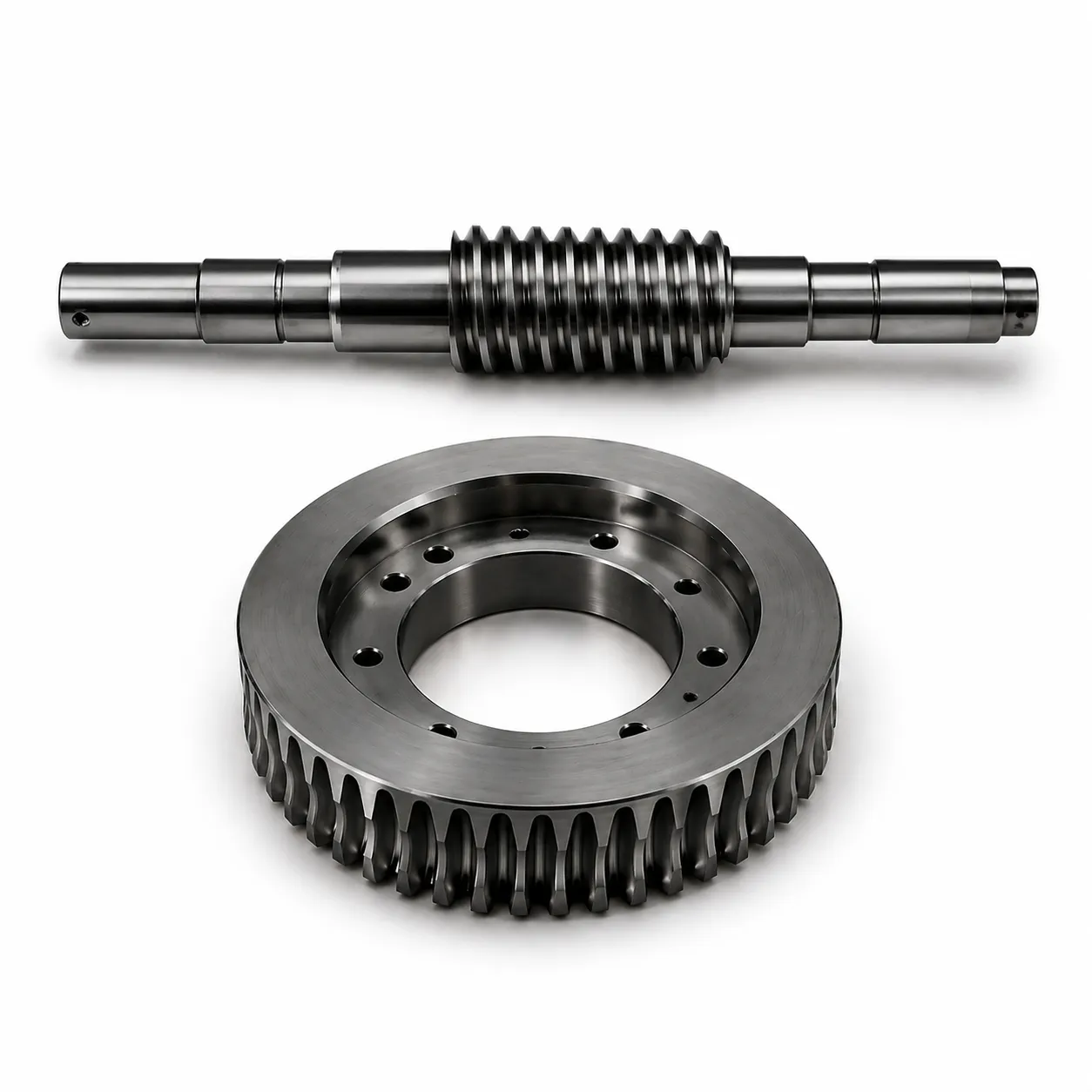
Worm gear reducer mesh geometry generates more friction-heat per kilowatt of input power than any other industrial gear configuration. The sliding contact between the steel worm thread and the bronze wheel produces friction coefficients of 0.04-0.10 depending on lubricant — compared with 0.001-0.003 for the rolling contact in helical and planetary meshes. The lubricant in a worm gear reducer is doing 30-50× more work per unit of input power than the same volume of oil in a helical gearbox.
The consequences cascade through the engineering economics. First, the lubricant’s friction coefficient directly sets the mesh efficiency — a 0.02 difference in μ produces a 3-4 percentage point shift in η. Second, the heat that lubricant fails to manage well becomes oil temperature, which determines lubricant degradation rate and replacement interval. Third, the EP (extreme pressure) additive package determines whether the bronze surface develops a stable protective film or wears actively at the contact zone.
For helical and planetary gearboxes, lubricant differences between PAG and mineral families produce smaller engineering deltas — typically 0.5-1.5% efficiency change and 1.2-1.5× service interval ratio. For worm gear reducer service, the same families produce 3-5% efficiency change and 2× service interval ratio. The economic case for premium lubricants is correspondingly stronger on worm geometry.
PAG (Polyalkylene Glycol) — Properties and Applications
Polyalkylene glycol is a synthetic gear oil family designed specifically for the demanding tribology of worm-on-bronze contact. The polyether backbone delivers a lower friction coefficient than mineral base oil (0.04-0.06 vs 0.07-0.10 with mineral), better viscosity-temperature stability across the operating range, and superior oxidation resistance at elevated temperature.
▣ PROPERTI UTAMA
- ▸ Viscosity index: 200-240 (excellent)
- ▸ Pour point: −40 to −50 °C
- ▸ Max continuous T_oil: 95 °C
- ▸ Friction μ (lubed bronze): 0.04-0.06
- ▸ Water solubility: yes (PAG-W variant)
✓ KEKUATAN
- → 2× service interval over mineral
- → 3-5% mesh efficiency improvement
- → 15 °C higher T_oil envelope
✗ TRADE-OFFS
- ✗ 3-4× per-litre cost premium
- ✗ Not compatible with mineral oil residues
PAG dominates premium worm gear reducer specifications across continuous-duty industrial applications — cement raw-mill feeds, mining auxiliaries, water treatment scrapers, paper-mill auxiliary drives. The lubricant cost premium recovers within 6-12 months on most installations above 1.5 kW running 8,000+ hours per year, through both energy savings and longer service intervals.
Mineral CLP — Properties and Applications
Mineral CLP gear oil is the cost-balanced workhorse across light-duty and intermittent worm gear reducer applications. The “CLP” designation per DIN 51517-3 indicates a refined mineral base oil with anti-corrosion (C), anti-wear (L), and EP-additive (P) packages. Properties suit packaging machinery, construction lifts, light agitators, and any application where shorter service intervals and lower efficiency are acceptable trade-offs against the lower per-litre cost.
▣ PROPERTI UTAMA
- ▸ Viscosity index: 95-110 (standard)
- ▸ Pour point: −15 to −25 °C
- ▸ Max continuous T_oil: 80 °C
- ▸ Friction μ (lubed bronze): 0.07-0.10
- ▸ Water tolerance: low (separates)
✓ KEKUATAN
- → Lowest per-litre cost
- → Universal supplier availability
- → Compatible with most legacy units
✗ TRADE-OFFS
- ✗ Half the service interval of PAG
- ✗ Higher friction → lower mesh efficiency
Side-by-Side Property Comparison
The matrix below pulls every property from the deep-dive sections into a single cross-reference table. Highlighted cells indicate which lubricant leads the other on each property.
| Milik | Synthetic PAG | Mineral CLP | Pemenang |
|---|---|---|---|
| Viscosity index | 200-240 | 95-110 | PAG |
| Pour point (°C) | −40 to −50 | −15 to −25 | PAG |
| Max continuous T_oil | 95 °C | 80 °C | PAG |
| Friction coeff (lubed bronze) | 0.04-0.06 | 0.07-0.10 | PAG |
| Service interval (rated) | 8,000 h | 4,000 h | PAG |
| Per-litre cost | 3-4× baseline | baseline 1.0× | Mineral |
| Water tolerance (humid) | Excellent (PAG-W) | Sedang | PAG |
| Mesh efficiency (Δ) | +3-5 pp | baseline | PAG |
PAG wins on seven of eight properties; mineral CLP wins on one — per-litre cost. The single mineral advantage is large enough to dominate the economics on light-duty intermittent applications, but disappears on continuous-duty service when total ownership cost is calculated correctly.
Cost Analysis Over 5-Year Service Life
The total cost comparison includes per-litre lubricant price, replacement frequency, labour for service, energy cost from efficiency difference, and downtime cost. The worked example below covers a typical Korean continuous-duty 5.5 kW worm gear reducer running 8,000 hours per year.
5-YEAR LUBRICANT COST CALCULATION (5.5 kW, 8,000 h/yr)
Dasar aplikasi
Frame: NMRV 110 / oil sump: 5 L | Korean industrial tariff: USD 0.10/kWh
Service labour: USD 80/hour, 2 hours per oil change | 5-year horizon
Mineral CLP (5 changes over 5 years at 4,000 h interval)
Lubricant cost: 5 × 5 L × USD 12 = USD 300
Service labour: 5 × 2 h × USD 80 = USD 800
Energy at η = 75%: 5.5/0.75 × 8000 × 5 × 0.10 = USD 29,333
Total mineral 5-yr cost: USD 30,433
Synthetic PAG (3 changes over 5 years at 8,000 h interval)
Lubricant cost: 3 × 5 L × USD 42 = USD 630
Service labour: 3 × 2 h × USD 80 = USD 480
Energy at η = 79%: 5.5/0.79 × 8000 × 5 × 0.10 = USD 27,848
Total PAG 5-yr cost: USD 28,958
5-year savings with PAG specification
Mineral total: USD 30,433
PAG total: USD 28,958
Net savings with PAG: USD 1,475 over 5 years
The savings are modest in absolute dollars but consistent — PAG specification typically pays back its premium within 18-30 months on continuous-duty drives above 1.5 kW. For applications running fewer than 4,000 hours per year, the energy savings shrink proportionally and mineral CLP becomes cost-competitive again.
Application Matrix — Which Lubricant for Which Use
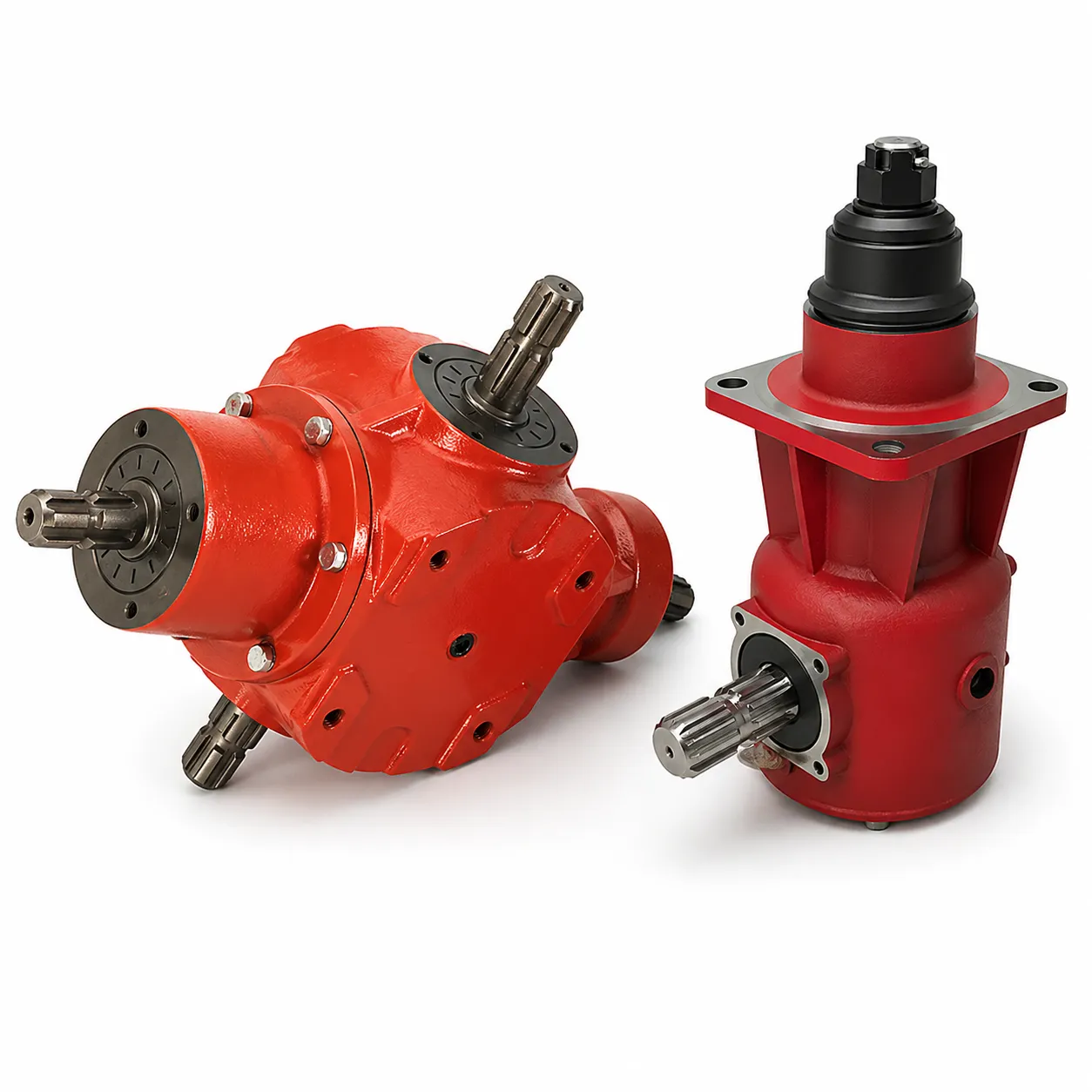
Eight Korean and Asian application classes and the lubricant typically specified for each. The matrix combines duty cycle, environment, and economics into a recommendation for each application class. For agricultural drives where shock loading and wide-temperature service add complexity, see related notes on agricultural gearbox lubrication.
◆ PAG SPECIFIED
Cement raw-mill feed (24h)
Continuous high-power; energy savings dominate.
Marine deck winch
Humid + chloride exposure; PAG-W water tolerance critical.
Mining auxiliary drive
Hot ambient + 24h duty; T_oil envelope decisive.
Outdoor solar tracker
Wide temperature range (−30 to +50 °C) needs high VI.
◆ MINERAL CLP SPECIFIED
Packaging line indexer (8h)
Single shift duty; cost-balanced choice.
Construction screw jack
Intermittent lifting duty; rare-use mineral acceptable.
Light agitator (≤2 kW, 8h)
Low power × short duty; energy savings minimal.
Stage drive (sporadic)
<500 hours/yr; replacement interval not binding.
Switching Between Lubricant Families — Compatibility Rules
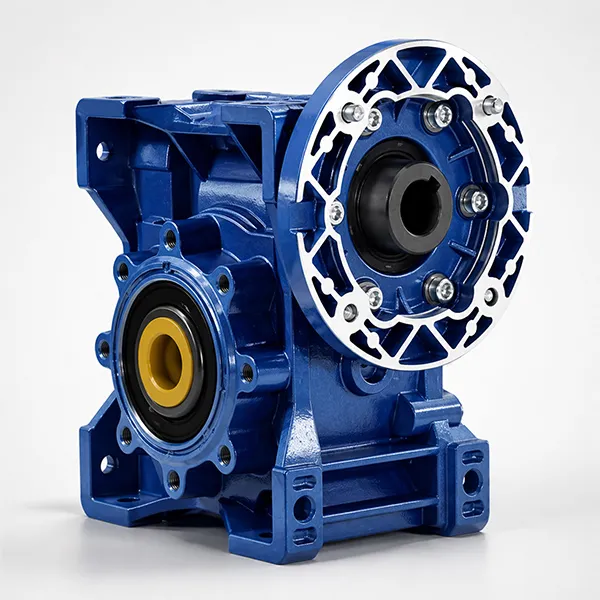
Switching from mineral CLP to synthetic PAG (or back) on an existing worm gear reducer installation requires care. PAG and mineral are not chemically compatible — mixing residues compromises both lubricants. Three compatibility rules govern when switching works cleanly and when it requires extra steps.
RULE 01 → SAFE
Same family → same family
Mineral CLP brand A → Mineral CLP brand B works directly. PAG to PAG works directly. Same-family viscosity grade change works directly.
RULE 02 → REQUIRES FLUSH
Mineral CLP → Synthetic PAG
Drain fully, flush twice with new PAG (50% volume each), drain again, then fill. Residual mineral > 5% destabilises PAG additive package.
RULE 03 → AVOID
Topping up PAG with mineral
Never top up PAG with mineral oil — incompatibility forms gel, blocks oil channels and accelerates wear. Use the same PAG specification for top-ups.
Five Common Lubricant Selection Mistakes
●KESALAHAN 01
Specifying ISO VG 100 instead of VG 220
Worm gear reducer needs VG 220 to maintain film at high contact pressure. Lighter grades film-fail under load and accelerate wear.
●KESALAHAN 02
Topping up PAG with mineral oil
Cross-family mixing forms gel, blocks oil galleries, breaks additive package. Always use same-family top-up.
●KESALAHAN 03
Using engine oil instead of gear oil
Engine oils lack EP additives needed for worm-bronze sliding contact. Use designated CLP/PAG gear oil only.
●KESALAHAN 04
Skipping flush during family switch
Residual mineral ≥ 5% in fresh PAG fill destabilises the synthetic. Always flush twice when switching families.
●KESALAHAN 05
Ignoring food-grade requirement
Food-processing worm gear reducer needs NSF H1-rated lubricant. Standard PAG/CLP not certified for incidental food contact.
PAG vs Mineral CLP FAQ
Q: What ISO VG grade should I specify for a typical worm gear reducer?
A: ISO VG 220 covers most standard ambient (10-40 °C) worm gear reducer operation. For very cold ambient (≤0 °C), drop to VG 150. For very hot ambient (≥45 °C continuous) or heavy load, step up to VG 320 or VG 460. The lubricant supplier datasheet shows the operating-temperature window for each grade — pick the grade whose midpoint matches your ambient temperature average.
Q: Can I use synthetic PAG in a worm gear reducer that was originally filled with mineral CLP?
A: Yes, after a thorough flush. Drain the mineral fully, flush the housing twice with new PAG (filling to 50% then draining each time), then fill normally. The procedure removes residual mineral that would otherwise contaminate the new PAG fill. Most worm gear reducer brands accept either lubricant family without housing modifications. Confirm with the manufacturer if the unit has unusual seal materials — some legacy seal compounds suit one family better than the other.
Q: Does PAG damage paints, hose materials, or sealants used in worm gear reducer construction?
A: PAG attacks some legacy paint systems and natural rubber components but is fully compatible with modern epoxy-painted worm gear reducer housings, NBR seals, FPM viton seals, and standard polyurethane hose. The exception worth checking: very old units (pre-1985) with shellac-based housing paints can develop paint blistering on the inside of the housing. Modern enamel paints handle PAG without issue. For seal compatibility, NBR is fine in both PAG and mineral; FPM is preferred for hot PAG applications.
Q: How do I check whether the original lubricant in a delivered worm gear reducer is PAG or mineral?
A: Three indirect tests. First, the manufacturer datasheet usually states the factory fill. Second, a small sample dropped on water — PAG dissolves slightly in water (PAG-W especially) while mineral oil floats and separates cleanly. Third, the colour — fresh PAG is typically clear-to-pale-yellow, while fresh mineral CLP is typically golden-amber. Be cautious of dyed lubricants — some manufacturers add dye for contamination indication, which makes the colour test unreliable. The water-droplet test is the most definitive field check.
Q: What’s the food-grade lubricant equivalent for PAG and mineral CLP?
A: NSF H1-rated synthetic gear oils replace standard PAG in food-processing worm gear reducer applications. Common products include Klüber Klübersynth UH1 series, Mobil SHC Cibus 220, and Total Nevastane SY 220. These are PAG-equivalent in performance with food-contact certification. Standard mineral CLP has limited NSF-rated equivalents — most food applications skip directly to NSF-rated synthetic. Service interval and engineering performance are comparable to industrial-grade PAG; cost premium runs 1.5-2× over standard PAG.
Q: My worm gear reducer is showing oil colour darkening — does that mean replacement is overdue?
A: Probably yes for mineral CLP; not necessarily for PAG. Mineral oil darkens visibly as additive package depletes — going from golden to brown to black across service life. PAG’s colour change is subtler; service-life monitoring relies on viscosity testing and oil-analysis programs rather than visual inspection. For mineral installations, dark brown colour signals replacement within 200-500 hours. For PAG, send a sample for laboratory analysis (TAN, viscosity, water content) rather than relying on colour. Browse our Katalog reduktor roda gigi cacing for sized frames with documented lubricant fill and service interval recommendations.
Need a Lubricant-Specified Worm Gear Reducer Quote?
Send the application — power, hours per day, ambient, food-grade requirement. Our Korean engineering team returns a worm gear reducer recommendation with PAG or mineral CLP factory fill, service interval projection and 5-year cost analysis within 24-48 hours.
Editor: Cxm