Small Worm Gear Gearbox: An Introduction
Small worm gear gearboxes are mechanical devices that transmit power and torque between non-parallel shafts. They are commonly used in industrial applications where high reduction ratios are required, and space is limited. Worm gearboxes are popular due to their compact size, high efficiency, and ability to handle shock loads.
A small worm gear gearbox typically consists of a worm gear, worm shaft, bearings, and housing. The worm shaft is a cylindrical shaft with a helical thread, while the worm gear is a cylindrical gear with teeth that mesh with the worm shaft. The bearings provide support for the shafts, reducing friction and wear. The housing encloses the gearbox components, protecting them from the environment.
One of the main advantages of small worm gear gearboxes is their high efficiency. Due to the large contact area between the worm gear and worm shaft, there is less slippage and power loss compared to other types of gearboxes. This makes worm gearboxes ideal for applications that require high precision and low power consumption.
Another advantage of small worm gear gearboxes is their ability to handle shock loads. The worm gear and worm shaft are designed to absorb sudden loads without damaging the gearbox. This is important in applications where sudden stops or starts are common, as it helps to prolong the life of the gearbox.
Despite their many advantages, small worm gear gearboxes do have some limitations. One of the main limitations is their low speed. Due to the design of the gearbox, the output speed is typically much lower than the input speed. This can be a disadvantage in applications that require high output speeds.
In conclusion, small worm gear gearboxes are an essential component in many industrial applications. With their compact size, high efficiency, and ability to handle shock loads, they are ideal for applications that require high precision and low power consumption. While they do have some limitations, the benefits of small worm gear gearboxes make them a popular choice among engineers and manufacturers.

How Does a Worm Gear Reducer Work?
Worm gear reducers are a type of mechanical power transmission device that can be found in various applications, ranging from automotive systems to industrial machinery. Understanding how a worm gear reducer works is crucial for engineers and technicians alike. In this article, we will delve into the inner workings of a worm gear reducer, exploring its components and the principles behind its operation.
1. Worm and Worm Wheel
The key components of a worm gear reducer are the worm and worm wheel. The worm is a cylindrical gear with one or more helical threads, while the worm wheel is a toothed wheel that meshes with the worm. The helical threads on the worm allow it to rotate the worm wheel in a controlled manner.
When the worm rotates, the helical threads engage with the teeth of the worm wheel. As the worm rotates, it transfers rotational motion to the worm wheel, causing it to rotate as well. The design of the helical threads ensures that the worm wheel can only rotate in one direction, preventing backdriving and providing a high gear reduction ratio.
2. Gear Reduction
One of the primary functions of a worm gear reducer is to provide gear reduction, which is the process of decreasing the rotational speed of an input shaft while increasing its torque. The worm and worm wheel work together to achieve this reduction.
The helical threads on the worm act as inclined planes, allowing the worm wheel to rotate with a lower speed than the worm. This speed reduction results in a corresponding increase in torque. The gear reduction ratio is determined by the number of teeth on the worm wheel in relation to the number of threads on the worm.
3. Self-Locking Feature
A unique characteristic of worm gear reducers is their self-locking feature. This means that when the input shaft is not actively turning the worm, the worm wheel remains locked in position and does not rotate. The helical threads on the worm create a mechanical advantage that prevents the worm wheel from backdriving.
This self-locking feature is particularly useful in applications where it is essential to maintain position or prevent undesired movement. For example, worm gear reducers are commonly employed in lifting and hoisting systems, as they can hold a load in place without the need for additional braking mechanisms.
4. Lubrication and Efficiency
To ensure optimal performance and longevity, proper lubrication is crucial for worm gear reducers. The meshing contact between the worm and worm wheel generates friction, which can lead to wear and decreased efficiency if not adequately lubricated.
Additionally, due to the sliding nature of the helical threads, worm gear reducers generally have lower mechanical efficiency compared to other types of gear systems. However, they make up for this lower efficiency with their ability to provide high gear reduction ratios and the self-locking feature.
In conclusion, a worm gear reducer operates by utilizing the interaction between a worm and worm wheel. Through the helical threads on the worm, rotational motion is transferred to the worm wheel, resulting in gear reduction and increased torque. The self-locking feature of worm gear reducers makes them suitable for applications requiring position holding. Proper lubrication is essential to maintain their efficiency and longevity.

Types of Worm Gearboxes
When it comes to mechanical power transmission systems, worm gearboxes play a crucial role in achieving efficient and reliable torque conversion. Worm gearboxes consist of a worm gear and a worm wheel, which work together to transmit power between the input and output shafts. In this article, we will explore different types of worm gearboxes and their unique characteristics.
1. Single Reduction Worm Gearbox
This type of worm gearbox is the most commonly used in various applications. It features a single set of worm and worm wheel, providing a compact design and high gear ratio. The single reduction worm gearbox is known for its efficiency in transmitting power and its ability to withstand heavy loads. It is widely used in industries such as agriculture, construction, and automotive.
2. Double Reduction Worm Gearbox
The double reduction worm gearbox consists of two sets of worm and worm wheel, providing an even higher gear ratio compared to the single reduction type. This gearbox offers increased torque output and improved efficiency, making it suitable for heavy-duty applications that require high power transmission. It is commonly used in mining, steel production, and other industrial sectors.
3. Hollow Shaft Worm Gearbox
Unlike the standard worm gearboxes, the hollow shaft worm gearbox features a hollow output shaft. This design allows for easy integration with other mechanical components such as motors or other shafts. The hollow shaft worm gearbox offers flexibility in terms of installation and enables compact system design, making it ideal for space-constrained applications.
4. Right Angle Worm Gearbox
The right angle worm gearbox is designed with a perpendicular input and output shaft arrangement. This type of gearbox is commonly used when the space is limited, and a change in the direction of power transmission is required. Its compact design and high torque capacity make it suitable for applications such as conveyor systems, packaging machinery, and robotics.
5. Worm Gearbox with Motor
Some worm gearboxes come with an integrated motor, creating a compact and ready-to-use power transmission unit. This type of gearbox eliminates the need for additional motor coupling and alignment, saving installation time and effort. It is widely used in automation systems, medical devices, and precision instruments.
In conclusion, worm gearboxes come in various types, each offering unique features and advantages for different applications. Whether it’s a single reduction gearbox for general-purpose use or a specialized right angle gearbox for space-constrained environments, choosing the right type of worm gearbox is crucial for achieving optimal performance and efficiency in mechanical power transmission systems.

”
Steel & Stainless Steel Worm Gearbox Reducer Benefits
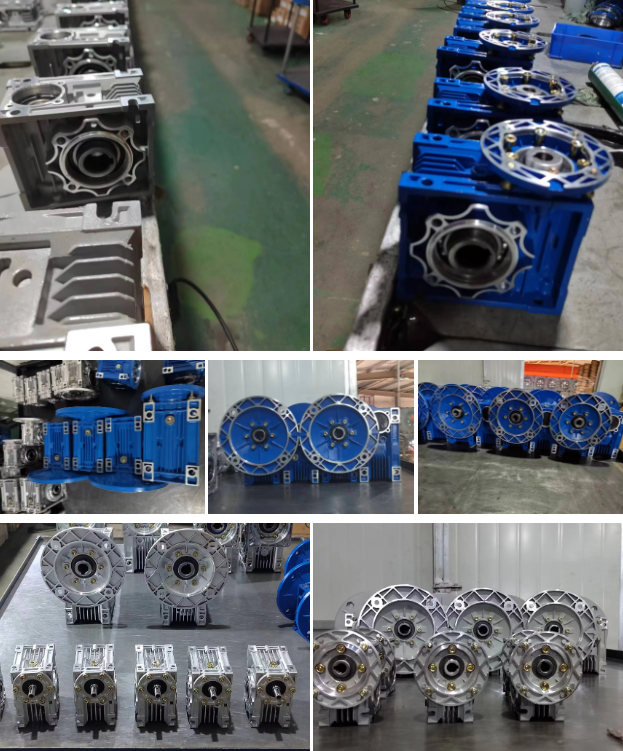
Worm gearboxes are widely used in various industries due to their functional design and reliable performance. Steel and stainless steel worm gearbox reducers are among the most popular options in the market, offering numerous benefits that make them an ideal choice for industrial applications.
Here are some of the key benefits of using steel and stainless steel worm gearbox reducers:
1. High Efficiency
Steel and stainless steel worm gearbox reducers are highly efficient, providing a high level of torque and power transmission with minimal energy loss. The design of the worm gear system ensures that the motion is transmitted at a right angle, resulting in a compact and space-saving design that is well suited for industrial applications.
2. Durable and Long-lasting
Steel and stainless steel worm gearbox reducers are known for their durability and long-lasting performance. They are designed to withstand heavy loads and high operating temperatures, making them ideal for use in harsh industrial environments. These reducers are also resistant to wear and tear, which reduces the need for frequent repairs and maintenance.
3. Versatile
Steel and stainless steel worm gearbox reducers are highly versatile, making them suitable for a wide range of industrial applications. They can be used in various industries, including food processing, automotive, mining, and agriculture, among others. Additionally, they are available in different sizes and configurations, making it easy to choose the right gearbox for your specific application.
4. Cost-effective
Steel and stainless steel worm gearbox reducers are cost-effective, offering excellent value for money. They are affordable to purchase, and their long-lasting performance reduces the need for frequent replacements, saving on maintenance and repair costs over time. Additionally, their simple design and ease of installation make them a cost-effective solution for a range of industrial applications.
Conclusion
Steel and stainless steel worm gearbox reducers are an excellent choice for industrial applications that require high efficiency, durability, versatility, and cost-effectiveness. Their numerous benefits make them a popular option across various industries, and their reliable performance ensures that they will continue to be a preferred choice for years to come.
Application of Worm Gearbox
In the field of mechanical engineering, worm gearboxes play a crucial role in various applications. This article aims to explore the wide range of applications where worm gearboxes are utilized and highlight their significance in specific industries. With their unique design and functionality, worm gearboxes offer several advantages, making them suitable for specific tasks.
1. Conveyor Systems: Worm gearboxes are extensively used in conveyor systems to transmit power and control the movement of materials. These gearboxes provide a high torque output, ensuring smooth and efficient operation of the conveyor belts. Their compact design makes them ideal for applications where space is limited.
2. Packaging Machinery: The packaging industry heavily relies on worm gearboxes for automated packaging machinery. These gearboxes enable precise and controlled movement, ensuring the accurate filling, sealing, and labeling of products. With their high gear ratio, worm gearboxes offer exceptional accuracy and repeatability in packaging processes.
3. Elevators and Lifts: Worm gearboxes are commonly used in elevators and lifts due to their ability to handle heavy loads and provide smooth vertical movement. The self-locking feature of worm gearboxes prevents the elevator from descending rapidly in case of power failure, ensuring the safety of passengers.
4. Robotics and Automation: In the field of robotics and automation, worm gearboxes are employed to control the movement of robotic arms and joints. Their high gear reduction ratio allows precise positioning and accurate control of the robotic systems. The self-locking characteristic of worm gearboxes avoids back driving, ensuring the stability of the robotic movements.
5. Solar Tracking Systems: Worm gearboxes find application in solar tracking systems, where they enable the adjustment of solar panels to optimize their alignment with the sun’s position. The rotational motion provided by worm gearboxes ensures efficient tracking and enhances the overall energy output of solar power systems.
How to Choose Worm Gearbox & How Custom Wormgearbox
When selecting a worm gearbox, it is important to consider several factors such as the application, torque requirements, and speed reduction ratio. Additionally, custom worm gearboxes can be designed to fit specific requirements and provide optimal performance. Here are some key points to consider when selecting and customizing a worm gearbox:
Application of Worm Gearbox

Worm gearboxes are commonly used in various applications that require high torque and speed reduction. Here are some of the most common applications:
1. Material Handling Equipment
Worm gearboxes are ideal for material handling equipment such as conveyors, elevators, and cranes. These machines require high torque and low speed, making worm gearboxes a perfect fit.
2. Packaging Machinery
Packaging machinery requires precise and continuous speed reduction. Worm gearboxes are ideal for this application because they provide consistent and uniform speed reduction.
3. Industrial Robotics
Worm gearboxes are also commonly used in industrial robotics. The high torque and low speed provided by worm gearboxes make them ideal for the heavy-duty requirements of robotic arms and other robotic applications.
4. Agricultural Machinery
Worm gearboxes are often used in agricultural machinery such as tractors, combines, and harvesters. The high torque and low speed provided by worm gearboxes make them ideal for the rugged requirements of agricultural machinery.
5. Automotive Industry
The automotive industry also frequently utilizes worm gearboxes in various applications, such as power steering systems, throttle control, and transmission systems.
Custom worm gearboxes can also be designed to fit specific requirements for these and other applications. Here are some factors to consider when customizing a worm gearbox:
Torque Requirements
The torque requirements of the application will determine the size and design of the worm gearbox. It is important to accurately calculate the required torque to ensure optimal performance.
Speed Reduction Ratio
The speed reduction ratio required for the application will also determine the design of the worm gearbox. It is important to consider the desired output speed and the speed of the input power source when selecting the speed reduction ratio.
Efficiency and Power Loss
Efficiency and power loss are important factors to consider when customizing a worm gearbox. The design should optimize the efficiency and minimize power loss to ensure optimal performance and longevity.
Mounting Options
Mounting options should also be considered when customizing a worm gearbox. Custom mounting options can ensure optimal fit and performance for specific applications.
Conclusion
Overall, selecting and customizing a worm gearbox requires careful consideration of several important factors. Understanding the application, torque requirements, speed reduction ratio, efficiency, power loss, and mounting options is crucial to ensuring optimal performance and longevity.
About HZPT
At HZPT, we are experts in the production and sale of worm gearboxes. Our extensive range of products and company advantages make us the ideal choice for your gearbox needs.
1. Quality and Durability: Our worm gearboxes are manufactured to the highest standards, ensuring excellent quality and long-lasting performance. We use premium materials and advanced manufacturing techniques to guarantee durability.
2. Efficient Design: Our gearboxes are designed with efficiency in mind. The unique low-noise gear tooth profile reduces friction, resulting in smooth and efficient operation. This efficiency translates to improved productivity and energy savings.
3. Reliable Performance: Our worm gearboxes are engineered to minimize oil leakage, ensuring reliable performance even in demanding applications. This reliability gives you peace of mind and minimizes downtime.
4. Customization Options: We understand that every customer has unique requirements. That’s why we offer customization options for our worm gearboxes, allowing you to tailor the product to your specific needs. We can modify various parameters such as size, ratio, and mounting options.
5. Advanced Manufacturing Facilities: Our state-of-the-art manufacturing facility is equipped with advanced imported machinery, including high-precision gear grinding machines, CNC lathes, and gear measuring instruments. This ensures that our products meet the highest standards of quality and precision.
In summary, choose HZPT for your worm gearbox needs and experience the benefits of our high-quality, durable, and efficient products. With customization options and a commitment to reliability, we are confident in delivering solutions that meet your specific requirements. Partner with us and benefit from our advanced manufacturing capabilities and unmatched expertise in the field of gearboxes.”