Snekkegearreduktion til fødevareforarbejdning: Hygiejnisk designspecifikation
Hygienic design principles, NSF H1 vs H2 vs H3 lubricant classification, IP65/66/69K wash-down ratings, plant-zone mapping and material trade-offs for food and beverage drives.
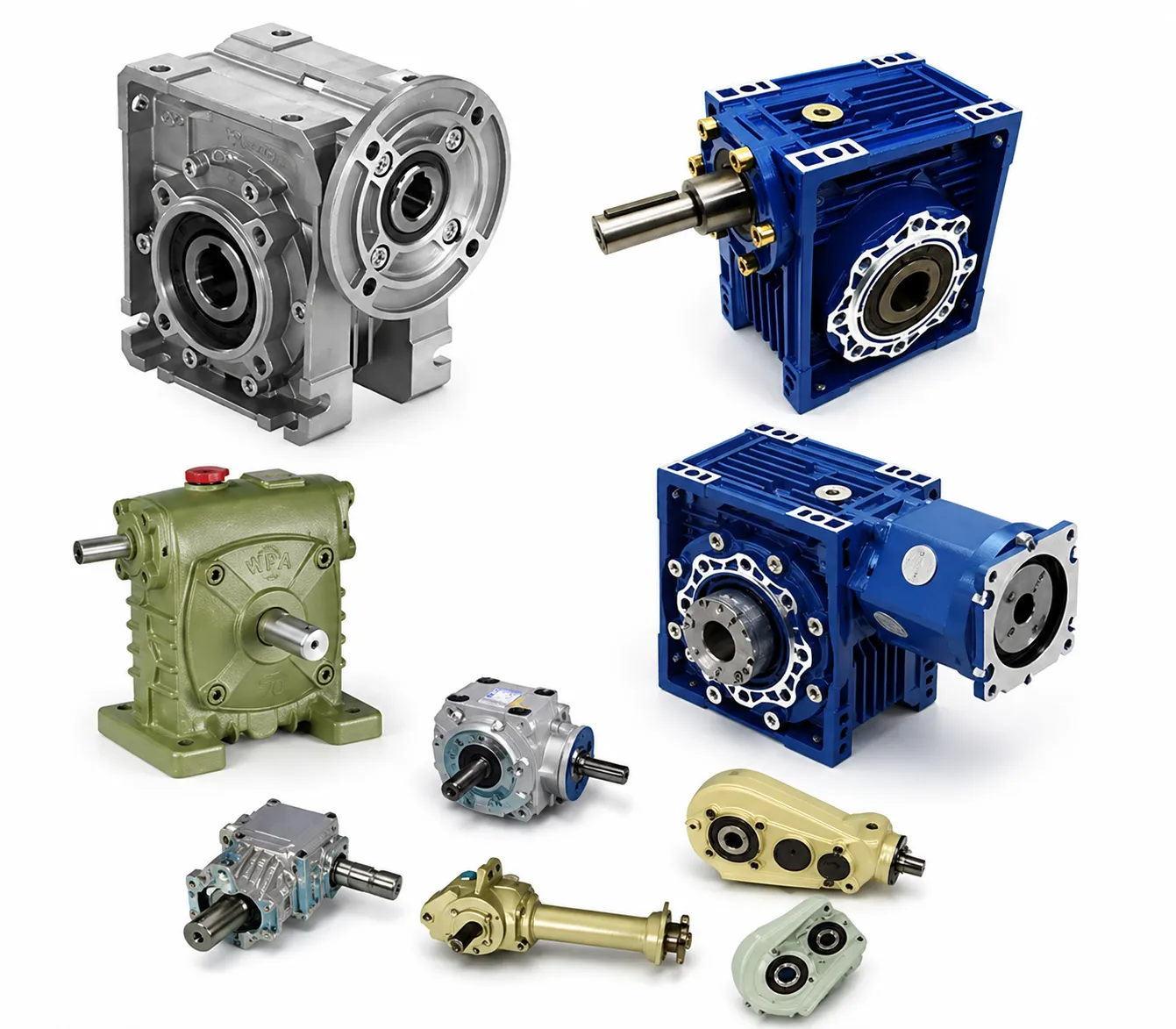
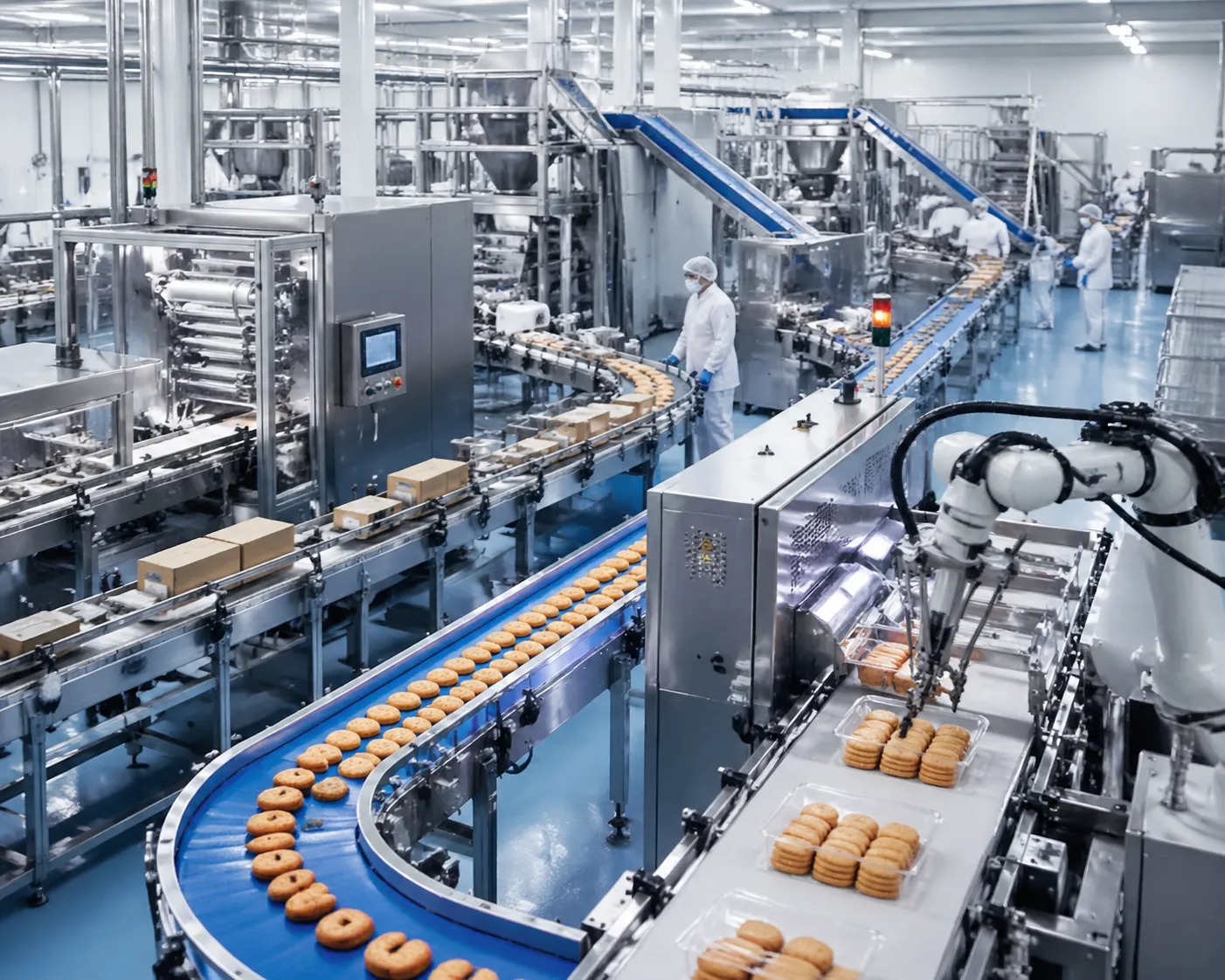
A worm gear reducer specified for food processing duty operates inside an environment that combines aggressive wash-down chemicals, frequent thermal cycling, splash exposure to product residues, and contractual obligations to NSF, FDA, EHEDG and HACCP standards. Generic industrial worm gear reducer units perform poorly here — uncoated cast iron rusts, standard mineral lubricants violate food-contact regulation, and IP54 sealing fails the first 60 °C wash-down cycle. The article below distinguishes hygienic-design worm gear reducer features from generic industrial equivalents, walks the NSF lubricant classification hierarchy, maps the IP rating ladder against typical wash-down regimes, and sizes typical food processing applications. For broader sizing context, see our companion six-step worm gear reducer sizing guide.
Hygienic Design Principles for Food Processing Drives
Hygienic design distinguishes a food-grade unit from a generic industrial gearbox through five physical principles intended to eliminate contamination harbour points and enable thorough wash-down. Each principle translates into a specific design feature visible on a properly specified food-duty unit.
▣ PRINCIPLE 01
Smooth, sloped exterior surfaces
Horizontal surfaces and recessed ledges trap product residue. Hygienic gearbox housings angle external surfaces 3-5° to drain wash water, with no horizontal shelves above operator height.
▣ PRINCIPLE 02
Eliminated dead spaces
Generic gearbox housings have stiffening webs, fastener pockets, and bracket channels that wash water cannot penetrate. Food-grade designs eliminate these features or seal them with smooth filler to remove micro-niches for bacteria.
▣ PRINCIPLE 03
Food-contact certified materials
Stainless steel 316L for splash zones; epoxy coating systems certified to FDA 21 CFR 175.300 for housings. Generic alkyd enamel paint fails 90 °C caustic wash within weeks.
▣ PRINCIPLE 04
Sealed inspection ports
Oil-fill, drain and breather ports use sanitary closures (clamp-fit, gasket-sealed) that prevent ingress and survive caustic wash-down. Generic plastic plugs degrade within months in food environments.
▣ PRINCIPLE 05
Output shaft seal certified for thermal cycling
FKM (Viton) or PTFE seals rated for repeated 4-15 °C product cycles to 80-95 °C wash-down cycles. Standard NBR seals harden and crack within 6-12 months in food environments.
NSF H1, H2 and H3 Lubricant Classifications
A food-grade worm gear reducer is not just about the housing — the lubricant inside must also be certified to NSF (National Sanitation Foundation) standards. Three categories distinguish acceptable food-environment lubricants by likely contact level:
| NSF Class | Permitted Contact | Typical Use in Gearbox |
|---|---|---|
| H1 | Incidental food contact permitted | Standard for food-grade gearbox in production zones — mandatory above product, recommended in all wash-down zones |
| H2 | No food contact permitted | Acceptable only in non-product zones — packaging, palletising, finished-goods conveying after final sealing |
| H3 | Soluble (release agent) — limited use | Specific use only — not a worm gear reducer lubricant in normal applications |
In practice, the food-grade worm gear reducer specification calls for NSF H1 lubricant — synthetic PAG or PAO base, viscosity grade ISO VG 220 or VG 320. Major brands include Mobil SHC Cibus, Klüber Klüberoil 4 UH1, and Total Nevastane. For lubricant selection background, see our PAG vs mineral CLP comparison.
IP65 / IP66 / IP69K Wash-Down Rating Ladder
Worm gear reducer ingress protection (IP) ratings define the unit’s tolerance to dust and water. Generic industrial gearboxes ship at IP54, which fails immediately when sprayed at any food-grade wash-down pressure. The ladder below maps the IP ratings encountered in food applications and what each protects against.
Three Plant Zones — Matching Worm Gear Reducer Class to Each
A typical food processing plant contains three hygiene zones with different equipment requirements. Specifying the worm gear reducer class to the actual zone — rather than over-specifying everywhere — manages capital cost without compromising compliance.
▣ ZONE A — PRODUCT CONTACT
High-care, direct contact
Above or beside open product. Daily wash-down with 80 °C caustic + sanitiser cycles. Includes mixing, dosing, dressing, slicing zones.
Specification: IP69K · NSF H1 lubricant · stainless 316L housing or epoxy-coated · FKM seals
▣ ZONE B — INDIRECT
Low-care, splash exposure
Adjacent to product but not directly above — secondary conveyors, transfer belts, sealed-product handling. Wash-down weekly rather than daily.
Specification: IP66 · NSF H1 preferred · epoxy-coated housing · NBR or FKM seals
▣ ZONE C — DRY / NON-PRODUCT
Dry, no contact
Palletising, warehouse conveying, packaging post-seal. No wash-down. Generic industrial worm gear reducer acceptable provided lubricant is at least NSF H2.
Specification: IP54-IP55 · NSF H2 lubricant · standard cast iron · NBR seals
Material Trade-Offs — Stainless 316L vs Anodized Aluminum vs Coated Cast Iron
Three housing materials dominate food-grade gearbox specifications. Each carries cost, weight and chemical resistance trade-offs that vary by zone.
| Ejendom | Stainless 316L | Anodized Aluminum | Coated Cast Iron |
|---|---|---|---|
| Caustic chemical resistance | Fremragende | Good | Fair (coating-dependent) |
| Weight (relative) | 100% baseline | ~36% (lightest) | ~92% |
| Capital cost (relative) | 280-350% baseline | 130-150% | 100% baseline |
| Suitable zone | A (high-care) | A or B | B or C |
| Varmeafledning | Moderat | Best | Good |
For most food processing applications outside the most demanding direct-product zones, anodized aluminum delivers the best balance of cost, weight and hygiene. Stainless 316L housings are warranted for zones where caustic exposure is daily or product contact is direct. Browse our katalog over snekkegearreduktioner for material variants by zone.
Sizing Worm Gear Reducer for Common Food Processing Drives
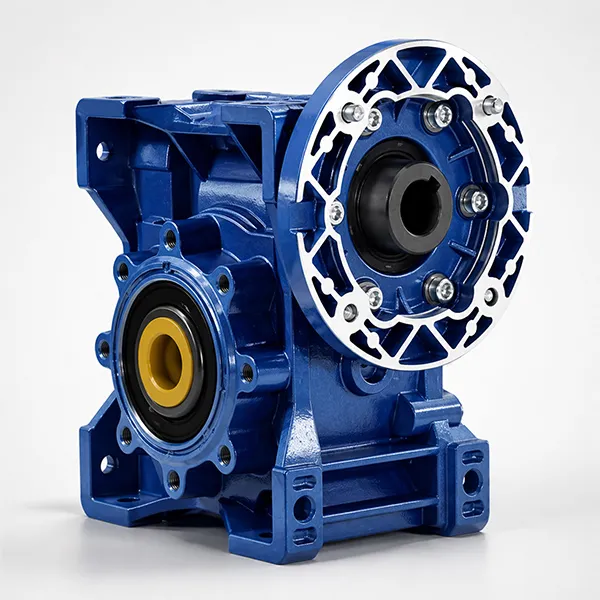
Five common food processing applications drive most worm gear reducer demand. The cards below summarise typical sizing approach for each.
▣ APPLICATION 01
Conveyor — packaging line
Output 0.4-1.5 kW, output speed 30-60 rpm, low shock load. Frame NMRV 063-NMRV 090, ratio 30-60. SF 1.0-1.2 typical.
▣ APPLICATION 02
Mixer / agitator — dough or batter
Output 2.2-7.5 kW, output speed 15-40 rpm, moderate-shock with starting torque spikes. Frame WPA 100-WPA 150. SF 1.4-1.6 for shock.
▣ APPLICATION 03
Bottle filler / capper drive
Output 0.55-1.5 kW, output speed 60-120 rpm, smooth load with high duty cycle. Frame NMRV 063-NMRV 075. SF 1.0-1.1.
▣ APPLICATION 04
Slicer / dicer chamber drive
Output 1.5-4 kW, output speed 200-400 rpm, low ratio higher input. Frame NMRV 075-NMRV 110, ratio 5-15. SF 1.1-1.3.
▣ APPLICATION 05
Carcass dressing line — meat processing
Output 4-11 kW, output speed 8-25 rpm, very high duty (24/7) with chemical wash-down 2× daily. Frame WPA 130-WPDS 175, SF 1.5-1.8, mandatory IP69K + 316L stainless or epoxy-coated cast iron.
Worm Gear Reducer Food Processing FAQ
Q: Does my food gearbox need to be IP69K everywhere, or just in the wet zone?
A: Only the wet zone — Zone A direct-product-contact areas. Zone B indirect/splash areas are typically adequate at IP66; Zone C dry/post-package areas can use generic IP54. Specifying IP69K everywhere doubles the capital cost and yields no compliance benefit in non-wash-down zones. Maintenance teams should map zones explicitly during the initial gearbox specification rather than over-specifying defensively.
Q: Can I substitute generic mineral oil for NSF H1 if there’s no actual product contact?
A: Not recommended for any unit in a food production facility. NSF H1 is the safe default — even if direct contact is unlikely, the consequences of a seal failure that does contact product are severe (product recall, regulatory action). H2 lubricant should only be used in physically segregated non-product zones (warehouse, dock area). The cost premium for H1 over H2 is typically only 20-30%, well worth the contamination risk reduction.
Q: How often should the gearbox be inspected in a food processing application?
A: Visually inspect external surfaces, seal integrity, and breather condition during every routine line CIP cycle (typically daily or weekly). Internal oil sample analysis is recommended every 3-6 months — half the typical interval for non-food applications, given the higher consequence of unplanned failure in production. Schedule oil changes at 4,000-6,000 operating hours or every 12 months whichever comes first; this is more conservative than industrial baseline.
Q: What documentation should accompany a food-grade gearbox purchase?
A: Five documents: (1) Material composition certificate identifying housing and seal materials; (2) NSF registration number for the factory-fill lubricant; (3) IP rating test certificate; (4) Coating system certificate (if epoxy-coated) showing FDA 21 CFR 175.300 compliance; (5) Declaration of conformity for any food-contact regulatory framework relevant to the destination market (EU 1935/2004, US FDA, China GB 4806, etc.). Together these constitute the audit-ready compliance package.
Q: How does a stainless 316L worm gear reducer body compare on heat dissipation?
A: Stainless 316L has thermal conductivity around 16 W/m·K vs cast iron’s 50 W/m·K and aluminum’s 200 W/m·K. The lower conductivity means stainless-housed units run 8-15 °C hotter at equivalent loads. For continuous-duty food applications this is significant — sizing should typically go up one frame size for stainless variants, or include forced cooling, to stay inside the safe operating temperature envelope.
Q: Do certifications like EHEDG and 3-A cover the worm gear reducer or only the food-contact equipment?
A: EHEDG (European Hygienic Engineering and Design Group) and 3-A Sanitary Standards (US dairy) primarily certify food-contact equipment and components. Gearbox units mounted nearby fall under “incidental contact” category — they should follow EHEDG/3-A hygienic design principles (smooth surfaces, no dead spaces) but typically do not carry the EHEDG/3-A certification mark themselves. The compliance standard for the unit is the lubricant (NSF H1) and the IP rating (IP66/IP69K). For end-customer audits requiring formal documentation, request a written declaration that the unit follows EHEDG hygienic design principles even if it doesn’t carry the certification mark.
Specifying a Food-Grade Drive?
Send us the application details (output power, speed, duty hours, plant zone, wash-down regime) and any contractual compliance requirements. Our Korean engineering team returns sized recommendations with the full compliance documentation package within 24-48 hours.
Redaktør: Cxm