Every water treatment plant, oil pipeline, power station, chemical plant, and irrigation system depends on valves — and every valve larger than approximately DN 150 (6 inches) requires a mechanical actuator to open and close it. The forces involved are substantial: a DN 600 gate valve on a water main requires 2,000-8,000 Nm of torque to drive the gate from fully open to fully closed against line pressure. A DN 1200 penstock sluice gate on a dam spillway may require 50,000-200,000 Nm. The worm gear reducer is the dominant speed-reduction mechanism inside valve actuators because it delivers three characteristics that no other gearbox architecture combines as effectively: extreme torque multiplication from motor speed to valve stem speed (ratios 50-2,000), inherent self-locking that holds the valve at any intermediate position without continuous power, and compact right-angle layout that fits within the constrained envelope of an actuator housing mounted on a valve bonnet.
The self-locking characteristic is particularly critical in valve actuation: when the motor stops (whether intentionally at the target position, or unintentionally through power loss), the valve must remain at its current position — not drift open under line pressure, not drift closed under spring force, and not oscillate under flow-induced vibration. A non-self-locking gearbox on a large gate valve would require a mechanical brake or latch to hold position — adding components, maintenance and failure modes to every valve in a plant that may operate hundreds of actuated valves. This article walks multi-turn and part-turn actuation, applicable standards, environmental extremes, manual override, and sized recommendations for the major valve categories.
Multi-Turn vs Part-Turn Valve Actuation
Valve actuators divide into two fundamental motion types, each requiring different worm gear reducer specification.

Self-Locking as Passive Valve Position Hold
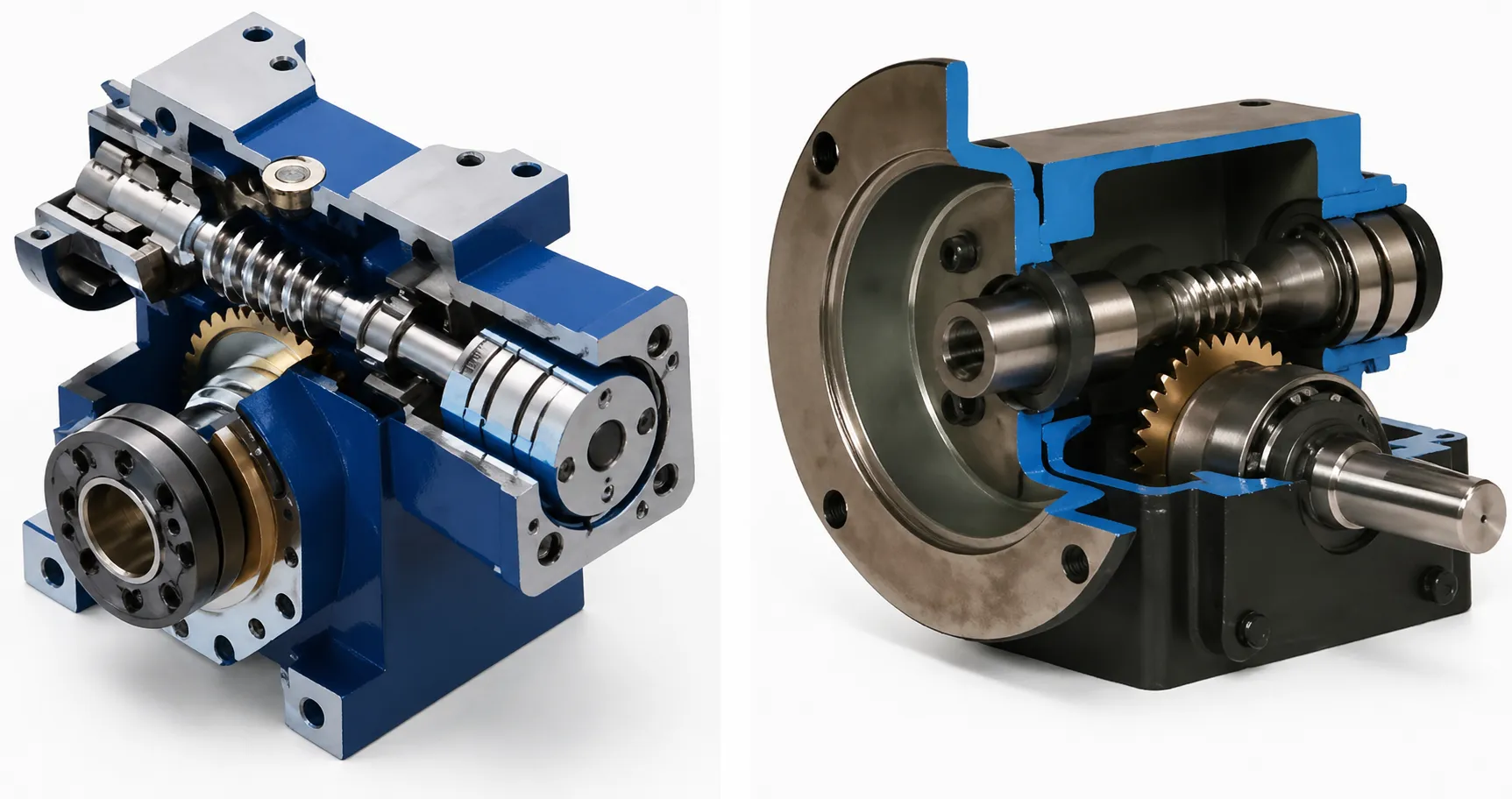
Self-locking is the single most important worm gear reducer characteristic in valve actuation — more important even than in crane hoists or escalators. A typical water distribution system operates 200-2,000 actuated valves, many of them in remote locations (underground chambers, hilltop reservoirs, pipeline pig stations) where power supply may be intermittent, communication may rely on low-bandwidth telemetry, and physical access for maintenance may require a 30-minute drive. In any of these locations, the valve must hold its commanded position — 100% open, 100% closed, or any intermediate throttling position — without continuous electrical power, without continuous communication with the SCADA system, and without any active holding mechanism.
The worm gear reducer self-locking at ratio ≥30 provides this passive position hold as a geometric characteristic of the worm and wheel mesh. Line pressure pushing on the gate or disc generates a torque that attempts to back-drive the worm gear reducer output shaft — but the worm thread geometry prevents back-driving regardless of the applied torque magnitude. The valve holds at its commanded position indefinitely: through power outages, through communication failures, through complete abandonment of the remote station. This passive hold capability eliminates the need for position-holding brakes, latches, or solenoid locks on every valve in the system — a significant reduction in per-valve complexity, cost, and maintenance burden across a 200-2,000 valve network.
IP68 Buried and Submerged Service
A substantial fraction of valve actuators operate in buried or submerged environments: underground valve chambers that flood during heavy rain, penstock gates on dam faces permanently submerged to operating water level, and pipeline valve stations in low-lying terrain subject to seasonal flooding. The worm gear reducer inside these actuators must survive continuous or intermittent water submersion without ingress to the oil bath, bearing surfaces or electrical connections.
IP68 — the highest standard ingress protection rating for immersion — certifies continuous submersion at a specified depth (typically 3-10 metres for valve actuator certification) for an indefinite period. Achieving IP68 on a worm gear reducer requires: double O-ring sealing on all housing joints (rather than single gaskets), potted or hermetically sealed cable entries, FKM shaft seals with secondary exclusion lip, and corrosion-resistant housing material (316L stainless for permanent submersion, epoxy-coated cast iron for intermittent flooding). The sealed design also prevents air exchange with the atmosphere, meaning the lubricant must be filled at factory to the correct level and cannot be topped up without opening the housing — making synthetic PAG with 5-10 year oil life the standard choice for buried actuator worm gear reducer applications.
Manual Emergency Override Integration
Every electric valve actuator must provide a manual override capability — the ability for an operator to open or close the valve by hand when electrical power is unavailable. This is a regulatory requirement in water, oil/gas and power station applications (BS EN 15714, API 600, AWWA C504). The manual override typically consists of a handwheel connected to the worm gear reducer input shaft through a declutching mechanism that disengages the motor drive and engages the handwheel drive.
The worm gear reducer ratio directly determines the manual override effort. A DN 600 gate valve requiring 5,000 Nm of stem torque, driven through a ratio-100 worm gear reducer, requires 50 Nm of input torque at the handwheel (plus friction losses of approximately 15-25%, bringing the actual handwheel effort to 60-65 Nm). At a 300 mm handwheel radius, this translates to approximately 200-220 N of rim force — within the 250 N maximum specified by BS EN 15714 for sustained manual operation. Higher ratios reduce the manual effort further but increase the number of handwheel turns required: at ratio 200 on the same valve, the handwheel effort halves to approximately 110 N, but the total turn count doubles. The worm gear reducer ratio must therefore balance electric motor sizing (lower ratio requires larger motor) against manual override ergonomics (higher ratio gives lower effort but more turns).
Seismic and Extreme Environment Considerations
Valve actuators in seismically active regions (Pacific Ring of Fire, Mediterranean, Middle East) must maintain position-holding capability during and after seismic events. The self-locking feature of the worm gear mechanism is inherently seismic-resistant — unlike mechanical brakes that can release under sustained vibration, the geometric self-locking cannot be defeated by shaking, vibration or acceleration forces. This characteristic satisfies IEEE 344 and IEC 60980 seismic qualification requirements for nuclear and critical-infrastructure valve applications without additional seismic locking devices. For nuclear power station applications, the worm gear actuator undergoes full seismic qualification testing (Operating Basis Earthquake + Safe Shutdown Earthquake acceleration levels) on a shake table, with functional verification immediately after the seismic event to demonstrate that the valve can still be operated electrically and manually. The combination of self-locking position hold during the earthquake plus verified post-seismic operability makes the worm gear architecture uniquely suited to safety-classified nuclear valve duty where failure consequences are most severe.
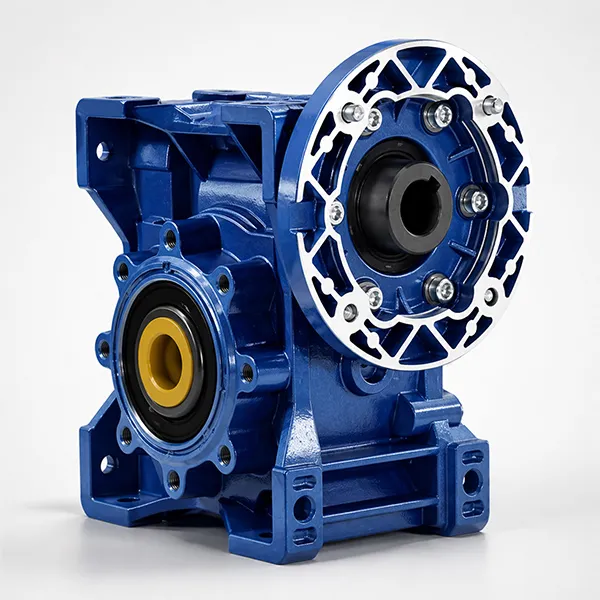
Corrosion environments for valve actuators extend beyond simple water exposure. Chemical plant valves handle chlorine, sulfuric acid, ammonia and caustic soda vapour environments. Power station cooling water valves operate in environments with biocide and anti-scale treatment compounds similar to cooling tower atmospheres. Desalination plant valves face high-salinity brine (35,000-70,000 ppm TDS). Each of these environments requires a specific coating and material combination on the worm gear actuator housing — ranging from standard epoxy for mild industrial atmospheres through high-build polyurethane for chemical vapour zones to duplex stainless (2205) housing for brine service. The coating and material specification should be matched to the specific site corrosion classification (ISO 12944 C1-C5, CX for immersion) rather than defaulting to either the cheapest or most expensive option across the entire valve fleet.
Temperature extremes present another environmental challenge. Pipeline valves in Arctic regions operate at -40 to -50 °C winter ambient — mineral CLP becomes solid at these temperatures, preventing any valve movement until the lubricant warms. Synthetic PAG with pour point below -50 °C maintains fluidity and film protection at Arctic temperatures. At the other extreme, steam pipeline valves in power stations and refineries operate at 150-300 °C pipe surface temperature, with radiant heat raising the actuator housing to 80-120 °C. High-temperature PFPE lubricant (rated to 250 °C continuous) and Kalrez (FFKM) seals replace standard FKM at these elevated temperatures. The temperature range specification — minimum AND maximum — must appear on the actuator purchase order to prevent supply of units that function at ambient but fail at operational extremes.
Sizing for Common Valve Actuator Categories
Five valve categories account for the majority of pužni reduktor demand in valve actuation:
◎ VALVE 01
Water distribution gate valve (DN 150-600)
Multi-turn. Torque 200-8,000 Nm. Frame NMRV 090-WPDS 175. Ratio 50-150. IP67-IP68 for buried chambers. Epoxy-coated CI or 316L. Manual override mandatory. 10-50 cycles/day.
◎ VALVE 02
Penstock / sluice gate (DN 600-2400)
Multi-turn. Torque 10,000-200,000 Nm. Two-stage or worm+spur gear train. 316L for permanent water contact. Manual override with extended handwheel column. 1-10 cycles/day.
◎ VALVE 03
Oil/gas pipeline ball valve (DN 100-900)
Quarter-turn. Torque 500-80,000 Nm. Break-away 200-300% of running. Frame WPDS 175-250. ATEX Zone 1/2 for gas service. SIL 2/3 functional safety. API 607 fire-safe. IP66-IP67.
◎ VALVE 04
Industrial butterfly valve (DN 200-1200)
Quarter-turn. Torque 200-50,000 Nm. Frame WPA 110-WPDS 200. Chemical resistance for process plant service. Moderate cycle rate (20-100/day for modulating service). VFD for throttling position control.
◎ VALVE 05
HVAC damper / louver actuator
Quarter-turn (0-90°). Torque 10-500 Nm. Frame NMRV 040-NMRV 075. Low power (0.05-0.25 kW). Self-locking holds damper position against air pressure. Modulating duty with BACnet/Modbus positioning. Indoor IP54 or outdoor IP65.
Common Valve Actuator Drive Specification Mistakes
◎ MISTAKE 01
Sizing to running torque without break-away factor
Ball and butterfly valves require 150-300% of running torque to unseat after extended closure. Sizing the worm gear reducer to running torque alone produces a motor stall at break-away on every opening cycle after overnight or weekend closure.
◎ MISTAKE 02
IP54 on buried valve chamber installation
Buried valve chambers flood regularly — IP67 minimum, IP68 for permanently submerged penstocks. IP54 allows water ingress within hours of first flooding event, destroying bearings and lubricant within one wet season.
◎ MISTAKE 03
Manual override exceeding 250 N rim force
Too-low worm gear reducer ratio produces excessive handwheel effort that operators cannot sustain during emergency manual operation. Verify the manual input torque against BS EN 15714 limits before finalising the ratio specification.
◎ MISTAKE 04
Mineral CLP in 10+ year buried actuator
Buried actuator worm gear reducer cannot be easily accessed for oil changes. Mineral CLP degrades in 1-3 years; synthetic PAG lasts 5-10 years. For buried service, PAG is not a premium option — it is the only practical choice for 10+ year unattended operation.
Valve Actuator Worm Gear Reducer FAQ
Q: How many valve actuator worm gear reducer units does a typical water treatment plant operate?
A: A mid-sized municipal water treatment plant (50,000-200,000 population served) typically operates 50-200 actuated valves: 20-60 gate valves on distribution mains, 10-30 butterfly valves on process piping, 5-15 penstock/sluice gates, and 15-50 modulating control valves. Each contains one worm gear reducer. A regional water utility serving 500,000+ population may operate 1,000-3,000 actuated valves across its distribution network. Standardising on 3-4 worm gear reducer frame families and 2-3 actuator platform sizes across this fleet reduces spare parts inventory and maintenance training complexity substantially.
Q: What is the expected service life of a valve actuator worm gear reducer?
A: Properly specified (IP67-68, FKM seals, synthetic PAG, epoxy-coated CI or 316L): 15-25 years for low-cycle water distribution valves (10-50 cycles/day), 10-15 years for moderate-cycle process control valves (50-200 cycles/day). The low cycle count of most valve applications means that mechanical wear is rarely the life-limiting factor — corrosion and seal degradation from environmental exposure typically determine service life. Proper IP rating and material specification extends service life far more than bearing or tooth upgrades.
Q: Does ATEX certification apply to valve actuator worm gear reducer?
A: Yes — for oil/gas pipeline valves and chemical plant valves in classified hazardous areas (Zone 1 or Zone 2 for gas, Zone 21 or Zone 22 for dust). The worm gear reducer itself is typically a passive mechanical component that does not generate ignition sources, but the complete actuator assembly (motor, wiring, limit switches, position transmitter) must carry ATEX or IECEx certification. The worm gear reducer contribution to ATEX compliance is primarily material and surface temperature: the maximum gearbox surface temperature must not exceed the T-class limit for the gas group, which constrains thermal derating and lubricant selection.
Q: Can worm gear reducer handle modulating (throttling) valve duty?
A: Yes — with VFD-controlled positioning. Modulating butterfly and ball valves require the actuator to position the disc or ball at intermediate angles (not just fully open or fully closed) to control flow rate. The worm gear reducer self-locking holds the modulating position without drift, and VFD speed control provides smooth positioning without overshoot. Backlash specification is more important for modulating service than for on/off service: 8-15 arc-minutes is typical for process control accuracy, versus 15-25 arc-minutes acceptable for on/off isolation valves.
Q: How do I get a sized recommendation for my valve actuator project?
A: Send our engineering team the valve details: valve type (gate, ball, butterfly, penstock), nominal size (DN), operating pressure and medium, required stem torque (including break-away factor), actuation type (multi-turn or quarter-turn), manual override requirement (handwheel rim force limit per BS EN 15714), environment classification (indoor, outdoor, buried, submerged, chemical vapour, Arctic, high-temperature), hazardous area classification (ATEX Zone if applicable), seismic qualification requirement (IEEE 344 if applicable), and estimated cycle rate (cycles per day and total lifetime cycles). We return a sized recommendation with ratio calculation, manual override verification, IP specification, corrosion coating system, lubricant grade and lead time within 24-48 hours. For water utility fleet procurement spanning 50+ actuated valves across multiple sites, we provide standardised frame family recommendations and consolidated volume pricing to reduce spare parts inventory and simplify maintenance operations across the distribution network.
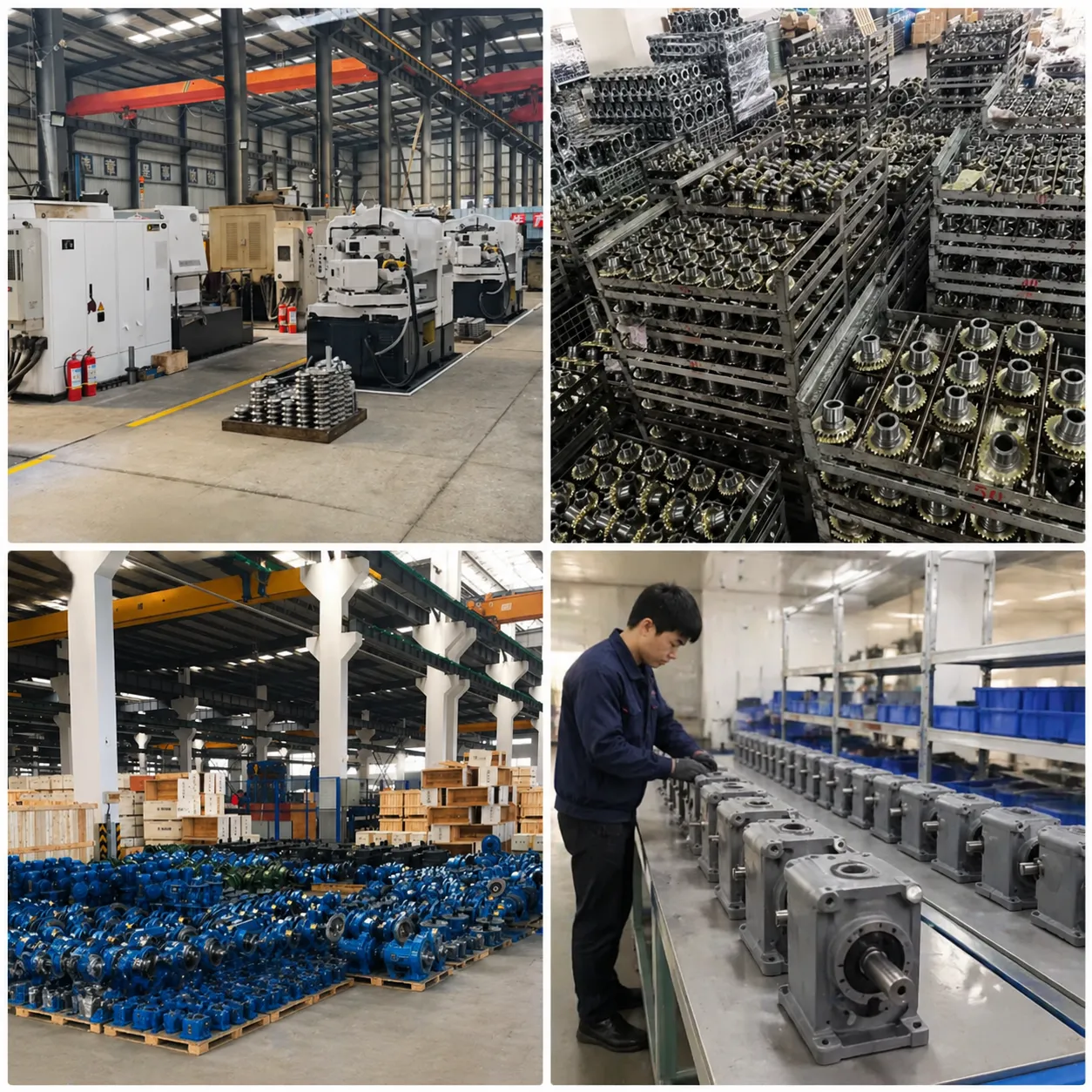
Sourcing Worm Gear Reducer for Valve Actuator?
Send us valve type, stem torque, environment and cycle rate. Our Korean engineering team returns sized recommendations with manual override verification and IP specification within 24-48 hours.
Urednik: Cxm