Matovaihteen reduktoriaus lämpömitoitus: Miksi P_th usein rajoittaa ennen P_mechia
A practical thermal-balance walkthrough covering heat-in calculation, dissipation mechanisms, cooling options, and the P_th worked example that determines whether mechanical rating or thermal capacity sets your real sizing limit.
Two ratings appear on every modern worm gear reducer datasheet: mechanical rating P_mech (the torque-and-stress envelope) and thermal rating P_th (the heat-dissipation envelope). For continuous-duty applications, P_th frequently sets the real sizing limit before P_mech does — meaning the worm gear reducer can take the torque but cannot dissipate the heat that running at that torque generates. Thermal undersizing is responsible for a large share of premature failures we see across Korean and Asian installed bases: oil temperature climbs above 95 °C, viscosity drops, mesh efficiency collapses, and bronze wear accelerates. The article below walks through the thermal balance equation, P_th calculation methodology, cooling options, and the symptoms of inadequate thermal sizing.
P_th vs P_mech AT A GLANCE
8h INTERMITTENT DUTY
P_mech rules
Heat dissipates between cycles
16-24h CONTINUOUS
P_th rules
Heat-out limits real capacity
P_th DERATING TYPICAL
60-80%
of P_mech at high ratio
Why Thermal Capacity Is the Binding Constraint Above Mechanical Rating
Worm gear reducer mechanical rating describes the unit’s torque-and-stress envelope — what gear, bearing, shaft and housing components survive structurally. Thermal rating describes a different envelope — what input power the housing can dissipate as heat without raising oil temperature past lubricant film capability (typically 95 °C continuous). The two ratings derive from independent physics, and they limit the unit at different operating points.
For short-cycle intermittent duty (lift drives, packaging indexers running with rest periods), thermal mass buffers the brief heat pulses; oil temperature equilibrates between cycles, and mechanical rating sets the limit. For continuous duty (cement raw-mill feed, mining auxiliaries, water treatment scrapers running 24 hours per day), every watt of efficiency loss converts to heat that the housing must shed continuously. Run a 22 kW worm gear reducer at 100% mechanical rating but 75% thermal rating, and oil temperature climbs from 70 °C steady-state up through 90, 95, and into the 100-110 °C zone where mineral CLP loses film, viscosity drops, and contact wear accelerates.
The reverse case — undersizing thermally while mechanical rating is fine — is the most common worm gear reducer installation mistake we see in continuous-duty service. Symptoms include oil temperature climbing past spec, accelerated bronze wheel wear, frequent re-tooth interventions, and lubricant degradation in 4,000-6,000 hours instead of the 8,000-hour catalogue interval. The cure is calculating P_th explicitly and selecting on the lower of the two ratings rather than picking on mechanical rating alone.
The Thermal Balance Equation — Heat In vs Heat Out
Thermal capacity comes down to a single equation that must balance at steady-state operation. The visualisation below shows the two sides of the equation, with the dominant terms on each side.
STEADY-STATE THERMAL BALANCE
▲ HEAT IN (sources)
Q_in = P_input × (1 – η)
- ▸ Mesh friction loss (dominant at high ratio)
- ▸ Bearing rolling friction
- ▸ Oil churning loss
- ▸ Seal drag
⇌
EQUALS
▼ HEAT OUT (sinks)
Q_out = h × A × (T_oil – T_amb)
- ▸ Natural convection (dominant in still air)
- ▸ Radiation (housing surface to ambient)
- ▸ Conduction to mounting structure
- ▸ Forced cooling (fan/water if fitted)
When Q_in > Q_out, oil temperature climbs until either Q_out catches up (housing reaches new equilibrium) or lubricant film fails (thermal runaway).
Heat-In Calculation — Efficiency Loss From Input Power
Heat-in equals the fraction of input power lost as friction. The arithmetic is straightforward: Q_in = P_input × (1 − η). For a worm gear reducer running at 75% efficiency on 11 kW input, heat generation is 11 × 0.25 = 2.75 kW. That is 2,750 watts the housing must dissipate continuously without raising oil temperature past spec.
The heat-in number scales steeply with ratio because efficiency drops with rising ratio. The same 11 kW input produces only 1.10 kW heat-in at i = 5 (η = 90%), but produces 4.62 kW heat-in at i = 100 (η = 58%). High-ratio worm gear reducer specifications need correspondingly larger thermal envelopes for the same mechanical rating, which is why P_th derating becomes severe at i ≥ 60.
Heat-in calculation feeds directly into P_th sizing — once you know how much heat needs leaving the housing, you can determine whether the catalogue cooling envelope handles it or whether forced cooling is required.
Heat-Out Mechanisms — Four Dissipation Paths
A worm gear reducer dissipates heat through four parallel mechanisms, each with its own physics and contribution share. Understanding the relative magnitudes lets the engineer identify which path is bottlenecking the thermal balance and where intervention helps most.
❄MECHANISM 01 — NATURAL CONVECTION
~50-60% of typical heat-out
Buoyancy-driven air movement past hot housing surface. Dominates in still-air ambient. Cooling fins amplify by 30-50% effective area.
❄MECHANISM 02 — RADIATION
~20-25% at typical surface T
Stefan-Boltzmann blackbody emission from housing surface. Scales as T⁴, so contribution rises sharply once housing climbs above 70 °C.
❄MECHANISM 03 — CONDUCTION
~5-15% via mounting feet
Heat conducted through mounting bolts into base-plate or chassis. Larger steel mounting frames absorb meaningful heat; thin sheet-metal frames contribute little.
❄MECHANISM 04 — FORCED COOLING
+50-200% if equipped
Cooling fan, oil-water cooler, or thermosyphon. Adds external heat-out path; covered in detail in next section.
Cooling Fan and Forced Cooling Options
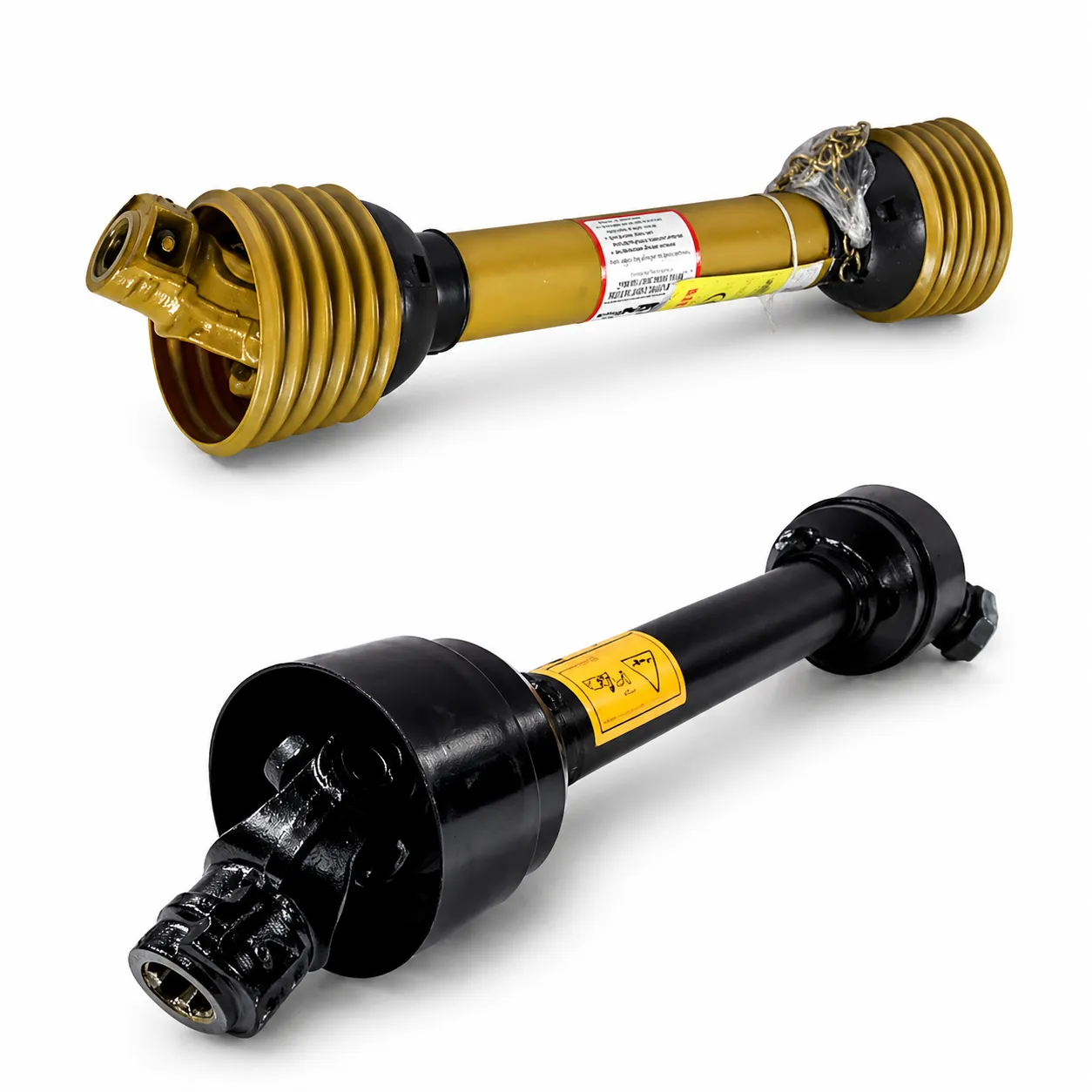
When natural convection plus radiation cannot dissipate enough heat to keep oil temperature in spec, three forced-cooling options extend the worm gear reducer thermal envelope. Each carries a different cost, complexity and capacity multiplier. For applications where coupling-mounted fans interact with drive shaft systems, see related notes on CV joint drive shaft thermal interactions.
+50-80% thermal capacity
Motor-mounted axial fan, blowing air across housing fins. Cheapest forced option.
Paras käyttökohde: mid-frame continuous-duty in still-air ambient up to 40 °C.
+150-200% thermal capacity
External oil pump circulates oil through plate cooler with industrial water. Highest capacity option.
Paras käyttökohde: large-frame heavy-industrial 24h duty; cement, mining auxiliary.
+30-50% thermal capacity
Passive convection loop with external air-cooled radiator. No moving parts.
Paras käyttökohde: outdoor or remote installations where pump electrical supply is impractical.
Calculating P_th — Worked Example
The P_th calculation translates the thermal balance equation into a worm gear reducer power rating. The worked example below covers a typical Korean continuous-duty drive specification.
P_th CALCULATION — CONTINUOUS-DUTY MIXER (NMRV 110, i = 60)
Application brief
Frame: NMRV 110 | Ratio: i = 60 | η ≈ 65%
Duty: 24h continuous | T_amb: 35 °C | T_oil target: 80 °C steady-state
Catalogue P_mech: 11 kW | Catalogue P_th (still air): 6.5 kW
Step 1 → Apply ambient correction to catalogue P_th
Catalogue P_th assumes T_amb = 20 °C. At 35 °C ambient:
ΔT (housing-to-ambient) reduces from 60 K to 45 K
Corrected P_th = 6.5 × (45/60) = 4.88 kW
Step 2 → Compare to required application power
Application requires: 7 kW continuous output
Input power needed = 7 / 0.65 = 10.77 kW
10.77 kW > corrected P_th 4.88 kW → INSUFFICIENT
Step 3 → Add cooling fan correction
Cooling fan adds ~70% capacity:
P_th with fan = 4.88 × 1.70 = 8.30 kW | Still insufficient
Step 4 → Resolve via larger frame or oil-water cooler
Option A: Step up to NMRV 130 (P_th still-air = 9.5 kW × 0.75 ambient × 1.7 fan = 12.1 kW ✓)
Option B: Stay at NMRV 110 + oil-water cooler (P_th = 4.88 × 2.5 = 12.2 kW ✓)
Either option resolves the thermal limit.
The example illustrates why P_th calculation cannot be skipped on continuous-duty worm gear reducer specifications. Sized on P_mech alone (11 kW catalogue ≥ 10.77 kW required), the unit looked acceptable. The thermal limit revealed it would run with oil temperature climbing into the 110 °C zone where lubricant film fails.
When Mechanical Rating > P_th — Derating Rules
Four derating rules govern how to handle the common case where catalogue mechanical rating exceeds the thermal envelope at your operating conditions. Browse our matovaihteiden alennusvaihteiden luettelo for sized frames with documented thermal ratings across all duty classes.
RULE 01 — SIZE ON THE LOWER OF P_mech AND P_th
Real worm gear reducer capacity is min(P_mech, P_th). Always pick on the lower number; ignoring P_th risks premature failure even when mechanical rating is generous.
RULE 02 — APPLY AMBIENT TEMPERATURE CORRECTION
Catalogue P_th typically assumes 20 °C ambient. Multiply by ratio (T_max−T_amb) / (T_max−20) for actual ambient. Hot environments shrink P_th rapidly.
RULE 03 — MULTIPLY P_th FOR FORCED COOLING
Cooling fan ×1.5-1.8 / oil-water cooler ×2.5-3.0 / thermosyphon ×1.3-1.5 on the still-air catalogue P_th value. Apply after ambient correction.
RULE 04 — CHECK INTERMITTENT vs CONTINUOUS
For ≤8h/day with rest periods, P_th rarely binds. For 16-24h continuous, P_th typically binds before P_mech and forced cooling becomes essential.
Symptoms of Inadequate Thermal Sizing
Inadequate thermal sizing presents through a recognisable progression of symptoms as oil temperature climbs. The four temperature bands below let field engineers diagnose whether a worm gear reducer installation is operating at the thermal limit, approaching it, or running comfortably below it.
OIL T < 70 °C
Healthy operation
P_th well above operating point. Catalogue service interval (8,000 h) achievable. No thermal action needed.
OIL T 70-85 °C
Warm but acceptable
P_th at ~80% of operating point. Service interval may shorten to 6,000 h. Monitor; consider fan upgrade if rising.
OIL T 85-95 °C
Approaching limit
P_th binding. Lubricant degrades 2-3× faster. Shorten interval to 4,000 h. Add forced cooling within 30 days.
OIL T > 95 °C
Critical — failure imminent
Film breakdown zone. Bronze wear accelerates 5-10×. Reduce duty immediately or upgrade frame; do not run continuously here.
Worm Gear Reducer Thermal Sizing FAQ
Q: My worm gear reducer datasheet only shows P_mech — does that mean P_th doesn’t apply?
A: P_th applies to every worm gear reducer; the datasheet may simply not publish it. Older catalogues frequently quote only mechanical rating. Request P_th from the manufacturer for any continuous-duty application — most ISO 9001 manufacturers publish thermal ratings on request even when not in the standard datasheet. If unobtainable, estimate via Q_in calculation: at i = 60, η ≈ 65%, so heat-in = 35% of input power; verify housing surface area can dissipate that under your ambient.
Q: How much does synthetic PAG vs mineral CLP lubricant change the P_th?
A: Synthetic PAG raises the maximum continuous oil temperature from 80 °C (mineral) to 95 °C, effectively widening the available thermal envelope by 20-30%. The same worm gear reducer frame at the same ambient sees a meaningfully larger P_th when filled with PAG, partly offsetting thermal undersizing. The combination “PAG + cooling fan” handles continuous-duty applications that “mineral CLP + still air” cannot. PAG cost premium typically pays back within 12 months on continuous-duty installations through both higher P_th and longer service intervals.
Q: Does aluminum housing have lower P_th than equivalent cast iron because it has less mass?
A: Slightly different — aluminum has higher thermal conductivity (96 vs 50 W/m·K) but lower thermal mass. For steady-state continuous duty, cast iron has marginally higher P_th because its larger mass moderates oil temperature swings; for short-cycle intermittent duty, aluminum’s faster heat spreading wins. The gap at steady state is typically only 5-10% — far smaller than the gap from ambient correction or forced cooling addition. Housing material is rarely the binding factor in P_th calculation; ambient and cooling provision dominate.
Q: Can I add a cooling fan as a retrofit on a thermally undersized worm gear reducer installation?
A: Yes, in most cases. Retrofit cooling fans are commonly available as accessories for NMRV, WP, SK and SCWS frames. The retrofit raises P_th by 50-80% within hours of installation. The exception is units where the input shaft does not extend behind the housing — fan-mounting space is integral to the frame design and may not exist on rear-mount-only configurations. Verify mechanical compatibility with the supplier before ordering retrofit fans.
Q: How does altitude affect worm gear reducer thermal capacity?
A: Lower air density at altitude reduces convection heat transfer slightly. The effect is small below 1,500 m elevation (under 5% P_th reduction). Above 2,500 m the reduction reaches 10-15% and starts mattering for sizing. For installations in mountain Korean and Chinese sites, apply an altitude correction factor of approximately (1 – 0.04 × elevation in km) on the catalogue P_th. Below 1,000 m, the altitude correction can be safely ignored.
Q: Should P_th calculation include intermittent peak loads or only steady-state continuous?
A: Steady-state only, for thermal balance purposes. Brief peak loads (1-5 minutes per hour) heat oil briefly but average out across the cycle; thermal sizing should use the continuous-equivalent operating power, not peak. The exception is high-cycle duty where peaks happen too frequently for thermal mass to buffer (more than 10% duty cycle); in those cases, calculate weighted-average input power and use that figure in the P_th comparison. Mechanical sizing (P_mech) handles peak loads through service factor instead of through thermal balance.
Need a P_th-Verified Worm Gear Reducer Specification?
Send the application — power, ratio, hours per day, ambient temperature, cooling provision. Our Korean engineering team returns a P_th calculation, sized worm gear reducer recommendation, and forced-cooling specification (if needed) within 24-48 hours.
Toimittaja: Cxm