Product Description
Reliability
DT14 adopts a fully helical gear and planetary gearbox structure, with low noise and strong load-bearing capacity;
The pressure resistance and overheating resistance of the friction material of the synchronizer are leading domestically, and the lifespan of the synchronizer has been extended to match that of the gearbox assembly;
The DT14 assembly has undergone 2 million kilometers of road validation, and the B10 has a lifespan of 1.6 million kilometers. The entire series can be equipped with hydraulic retarders to ensure driving safety.
Convenience
Single H control of the top cover and front and rear auxiliary box pneumatic shift mode, achieving step-by-step gear shifting and jumping operation, with clear gear positions and convenient operation;
Self enhancing double cone synchronizer reduces shifting force by 2-3 times compared to synchronizers of the same level, making shifting more lightweight and giving a sedan like feel;
The ultra long oil change cycle of 300000 kilometers is at the leading level in the industry, making it easier for users to use.
High efficiency
Adopting a dual lubrication method of active lubrication and splash lubrication to lubricate key components such as bearings, synchronizers, and gears, providing more complete lubrication and lower friction losses;
By using an independent external oil cooling system, the problem of high temperature of the gearbox assembly in special road conditions (climbing long slopes) is avoided, ensuring stable operation of components, higher transmission efficiency, and prolonging oil change HangZhouage and gearbox service life.
| Transmission product characteristic parameters | |
| Torque (N · m) | 2000-3200 |
| Transmission efficiency | 97.4% |
| Noise (dB) | 86 |
| Net weight (kg) | 302 |
| Oil change HangZhouage (km) | 300 thousand |
| Speed ratio | DD/OD(DD:1-16.41,3.22-15.06 OD:0.8-13.16,2.58-12.09) |
| B10 Durability (km) | 1 million 200 thousand |
Here’s why our products stand out:
1. Extensive Product Range: We offer a diverse selection of buses, school buses, andspecial purpose vehicles to cater to various transportation needs. Whether yourequire standard buses for public transport, specialized school buses withenhanced safety features, or custom-built special purpose vehicles for specificapplications, we have a solution to meet your requirements.
2. Superior Quality and Reliability: Our vehicles are manufactured to the highestindustry standards, ensuring exceptional quality, reliability, and longevity. Wecollaborate with reputable manufacturers and conduct rigorous quality controlchecks to deliver products that exceed customer expectations. Our commitmentto CHINAMFG is reflected in every vehicle we offer.
3. Cutting-Edge Technology: We incorporate advanced technologies andinnovations into our vehicles to enhance performance, efficiency, and safety.From fuel-efficient engines and intelligent control systems to state-of-the-art
safety features and eco-friendly designs, our products are at the forefront ofautomotive technology.
4. Customization Options: We understand that every client has unique needs ancpreferences, Therefore, we provide customization options to tailor our vehiclesaccording to specific requirements. Whether it’s seating capacity, interiorconfigurations, accessibility features, or branding elements, we work closely withour clients to deliver personalized solutions.
5. Focus on Safety: Safety is our top priority. Our school buses are designed withcomprehensive safety features, including reinforced structures, advanced brakincsystems, and integrated safety technologies. We prioritize passenger and driversafety to provide peace of mind for both educational institutions and parents.
6. Exceptional After-Sales Service: Our commitment to customer satisfactionextends beyond the purchase. We provide reliable after-sales service andsupport, including spare parts availability, technical assistance, and maintenanceguidance. Our dedicated team ensures that our customers receive prompt andefficient service throughout the ownership lifecycle.
FAQ
1.What do you need to provide a quote?
Please kindly send us the drawing of your product. Details below should be included,
A.Materials B. Surface Finish C. Tolerance D. Quantity
(Please be noted that these are essential for our quoting. We couldn’t quote the specific
price without any of them.).
2.When can I get the price?
Our professional sales team will feedback your RFQ within 12hours, and give you the Quotation within 48hours max. if the drawing and specification is all in details.
3.How can I get the sample to check your quality?
After price confirmation, you can require for samples to check our product’s quality. If you just need a blank sample to check the manufacturing quality, we will provide you sample after the sample order confirmed.
4.What’s the lead time for Mould and samples ?
For normal project, we can complete Mould and supply the 1st article sample within 30 to 40days.
For urgently project, we can complete the Mould and Sample within 20days max.
5.What’s the payment terms for Order ?
For Mould/tooling and sample : 50% deposit pay by Order, rest 50% pay after sample approval.
For production Order for new Customers : we request 30% down payment, rest 70% pay by copy of Original B/L copy. For long lasting regular customer, we can give better payment terms, such as 100% pay after delivery or by B/L copy.
/* October 22, 2571 15:47:17 */(()=>{function d(e,r){var a,o={};try{e&&e.split(“,”).forEach(function(e,t){e&&(a=e.match(/(.*?):(.*)$/))&&1
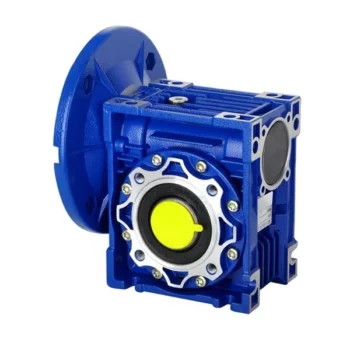
How to Install and Align a Worm Reducer Properly
Proper installation and alignment of a worm reducer are crucial for ensuring optimal performance and longevity. Follow these steps to install and align a worm reducer:
- Preparation: Gather all the necessary tools, equipment, and safety gear before starting the installation process.
- Positioning: Place the worm reducer in the desired location, ensuring that it is securely mounted to a stable surface. Use appropriate fasteners and mounting brackets as needed.
- Shaft Alignment: Check the alignment of the input and output shafts. Use precision measurement tools to ensure that the shafts are parallel and in line with each other.
- Base Plate Alignment: Align the base plate of the reducer with the foundation or mounting surface. Ensure that the base plate is level and properly aligned before securing it in place.
- Bolt Tightening: Gradually and evenly tighten the mounting bolts to the manufacturer’s specifications. This helps ensure proper contact between the reducer and the mounting surface.
- Check for Clearance: Verify that there is enough clearance for any rotating components or parts that may move during operation. Avoid any interference that could cause damage or performance issues.
- Lubrication: Apply the recommended lubricant to the worm reducer according to the manufacturer’s guidelines. Proper lubrication is essential for smooth operation and reducing friction.
- Alignment Testing: After installation, run the worm reducer briefly without a load to check for any unusual noises, vibrations, or misalignment issues.
- Load Testing: Gradually introduce the intended load to the worm reducer and monitor its performance. Ensure that the reducer operates smoothly and efficiently under the load conditions.
It’s important to refer to the manufacturer’s installation guidelines and specifications for your specific worm reducer model. Proper installation and alignment will contribute to the gearbox’s reliability, efficiency, and overall functionality.
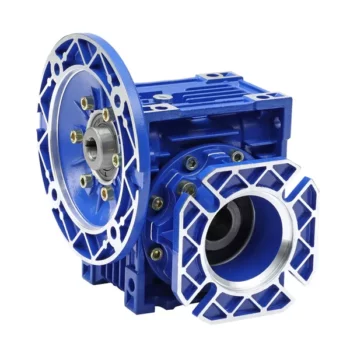
How to Calculate the Input and Output Speeds of a Worm Gearbox?
Calculating the input and output speeds of a worm gearbox involves understanding the gear ratio and the principles of gear reduction. Here’s how you can calculate these speeds:
- Input Speed: The input speed (N1) is the speed of the driving gear, which is the worm gear in this case. It is usually provided by the manufacturer or can be measured directly.
- Output Speed: The output speed (N2) is the speed of the driven gear, which is the worm wheel. To calculate the output speed, use the formula:
N2 = N1 / (Z1 * i)
Where:
N2 = Output speed (rpm)
N1 = Input speed (rpm)
Z1 = Number of teeth on the worm gear
i = Gear ratio (ratio of the number of teeth on the worm gear to the number of threads on the worm)
It’s important to note that worm gearboxes are designed for gear reduction, which means that the output speed is lower than the input speed. Additionally, the efficiency of the gearbox, friction, and other factors can affect the actual output speed. Calculating the input and output speeds is crucial for understanding the performance and capabilities of the worm gearbox in a specific application.
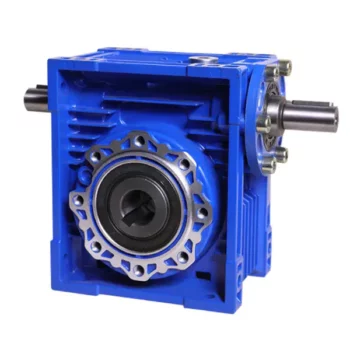
What is a Worm Gearbox and How Does It Work?
A worm gearbox, also known as a worm gear reducer, is a mechanical device used to transmit rotational motion and torque between non-parallel shafts. It consists of a worm screw and a worm wheel, both of which have helical teeth. The worm screw resembles a threaded cylinder, while the worm wheel is a gear with teeth that mesh with the worm screw.
The working principle of a worm gearbox involves the interaction between the worm screw and the worm wheel. When the worm screw is rotated, its helical teeth engage with the teeth of the worm wheel. As the worm screw rotates, it translates the rotational motion into a perpendicular motion, causing the worm wheel to rotate. This perpendicular motion allows the worm gearbox to achieve a high gear reduction ratio, making it suitable for applications that require significant speed reduction.
One of the key features of a worm gearbox is its ability to provide a high gear reduction ratio in a compact design. However, due to the sliding nature of the meshing teeth, worm gearboxes may exhibit higher friction and lower efficiency compared to other types of gearboxes. Therefore, they are often used in applications where efficiency is not the primary concern but where high torque and speed reduction are essential, such as conveyor systems, elevators, automotive steering systems, and certain industrial machinery.


editor by lmc 2024-11-28